This trip started from Porto, Portugal, then had a layover in Lyon, France, before arriving in Istanbul.
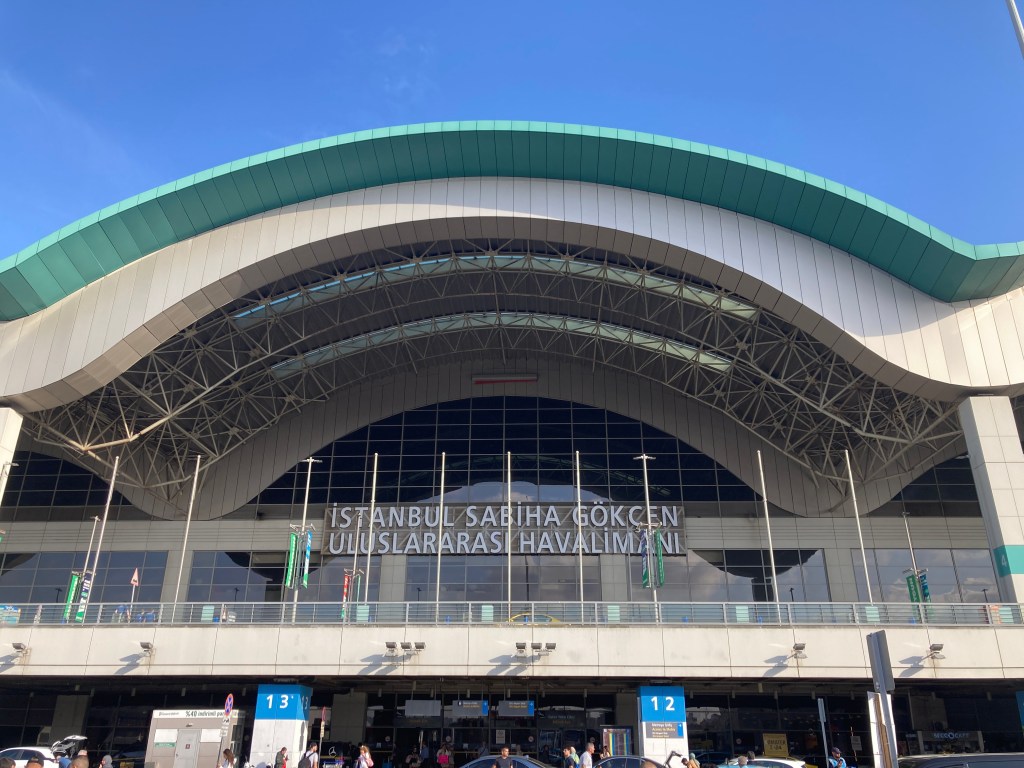
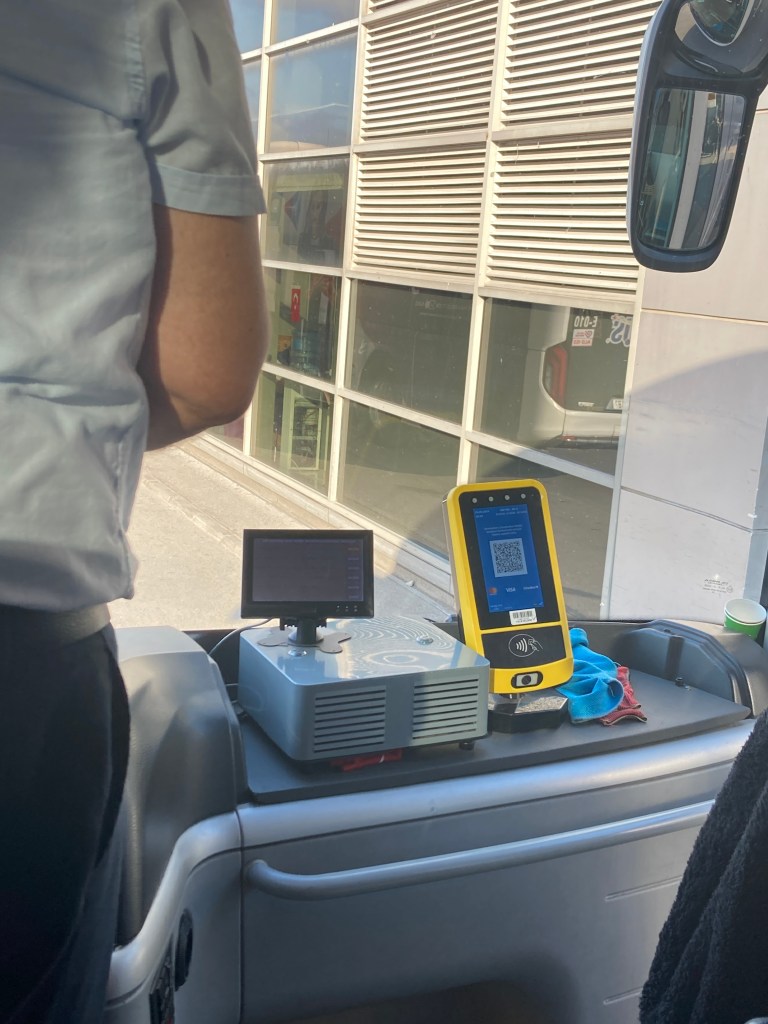
Arrive at Istanbul International Airport (Aeroporto Internacional Sabiha Gökçenat) 4:00 PM. Opposite the airport exit, there is a bus station where you can buy a bus ticket to Taksim Square in the city center. The ticket price is 121 lira.Buses accept payment by credit card.
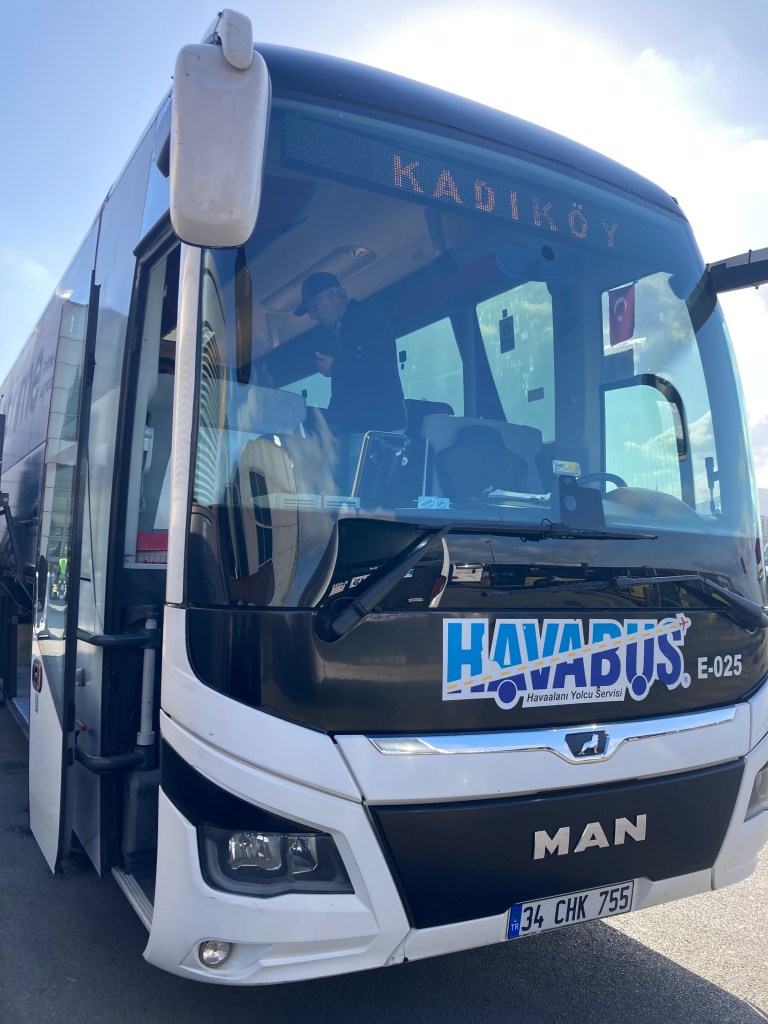
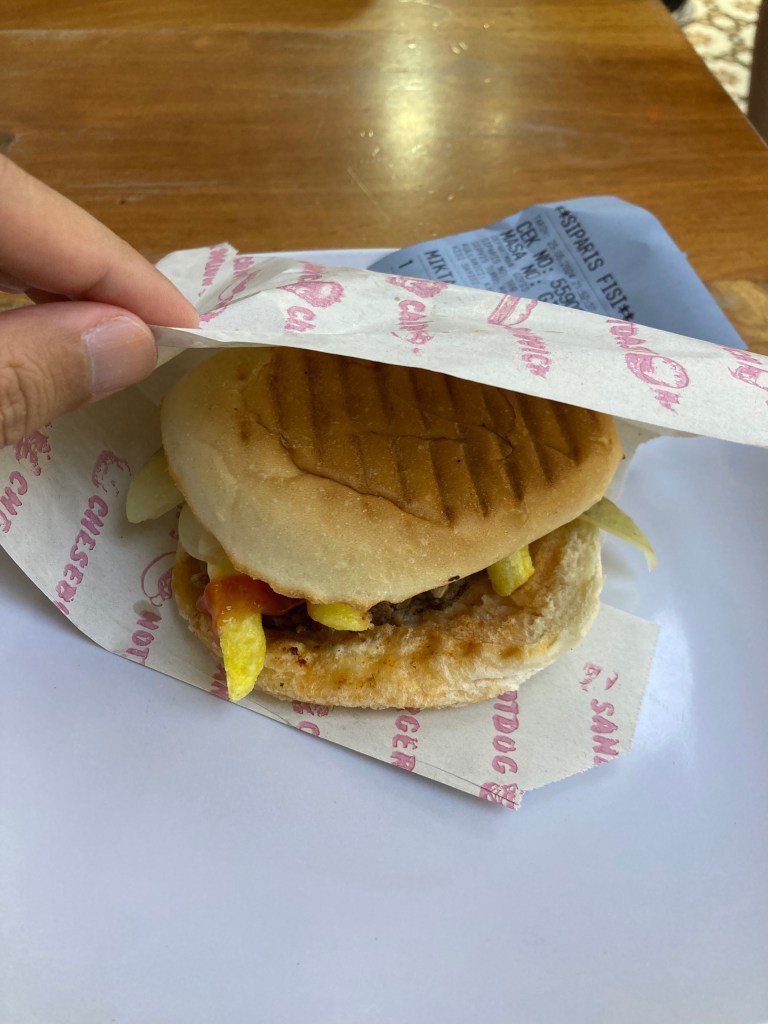
After an hour’s journey, I finally arrived at the city center, unloaded my luggage and took a stroll. It felt similar to Europe. There were many young men on the street recommending bars, but after reading many reviews online, I found out that many bars were rip-offs, so I declined all of them. I grabbed something to eat casually, then returned to the hotel to sleep, preparing for tomorrow’s adventure.
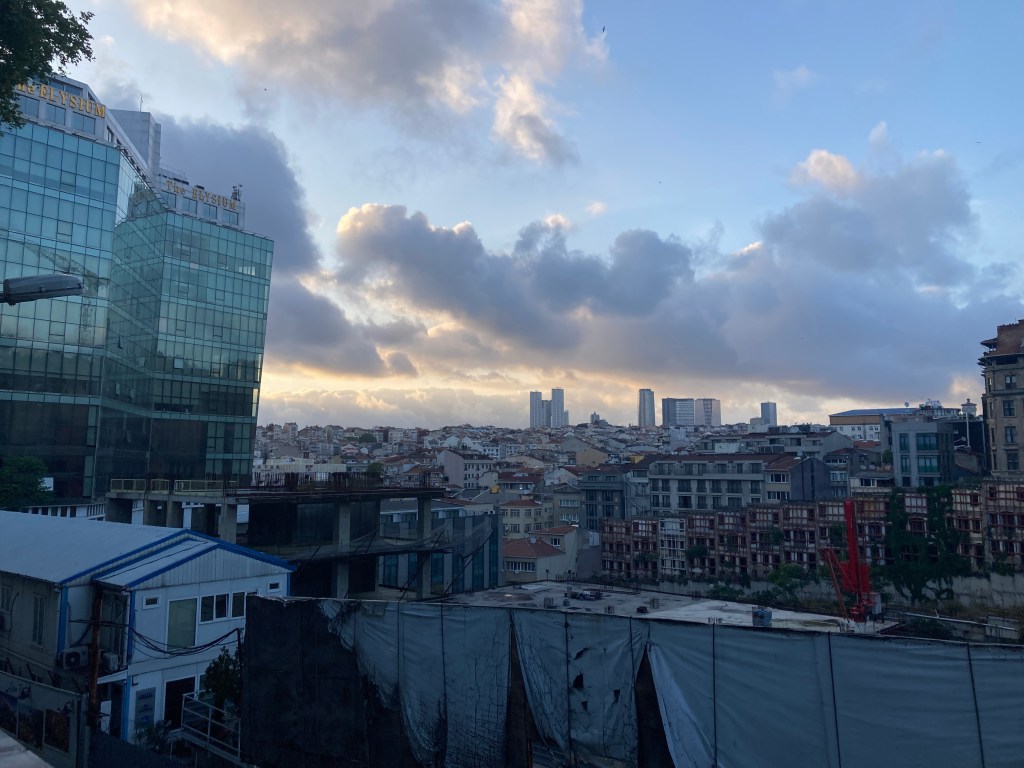
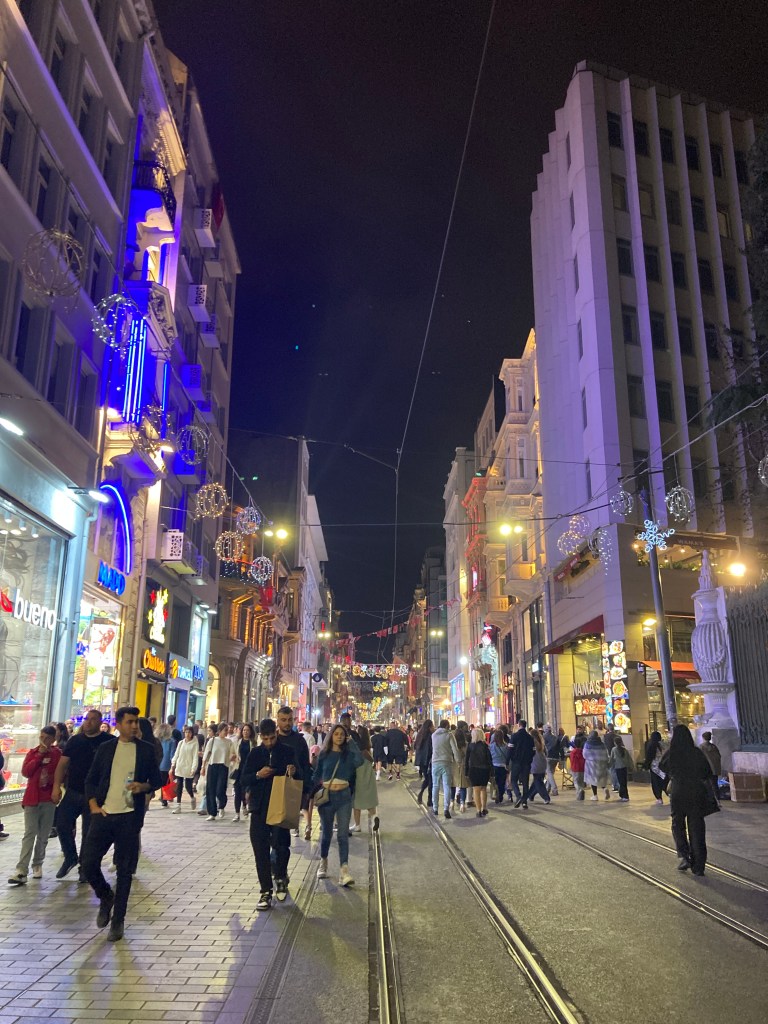

İstiklal Avenue
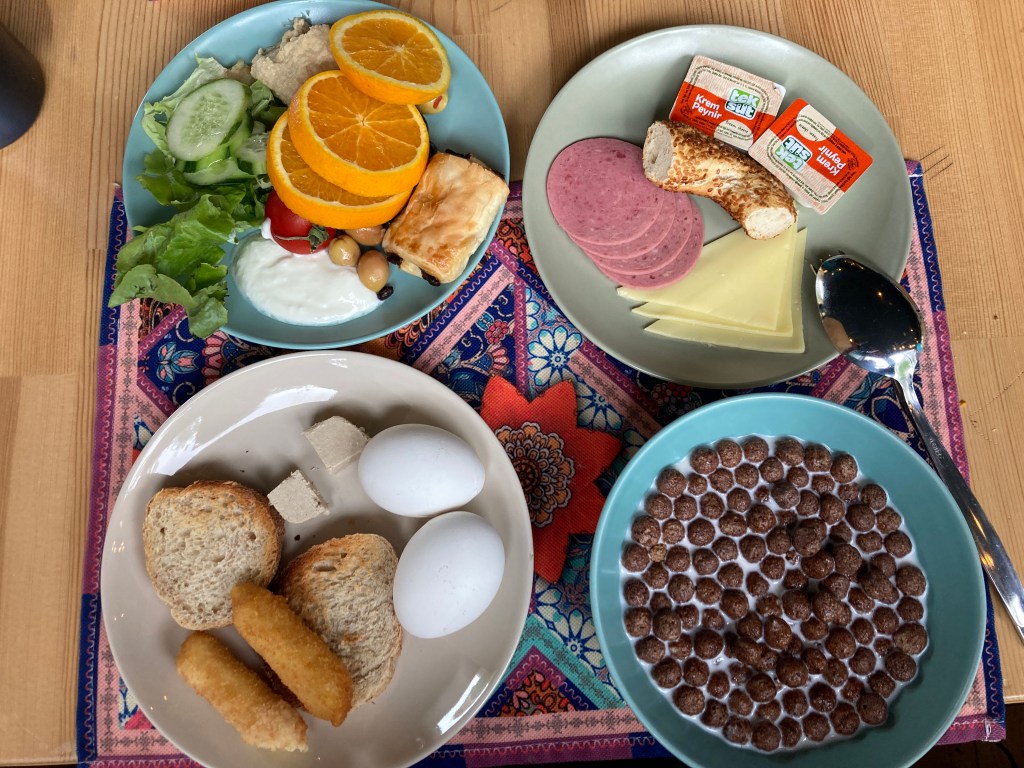
After having breakfast, I began today’s itinerary.
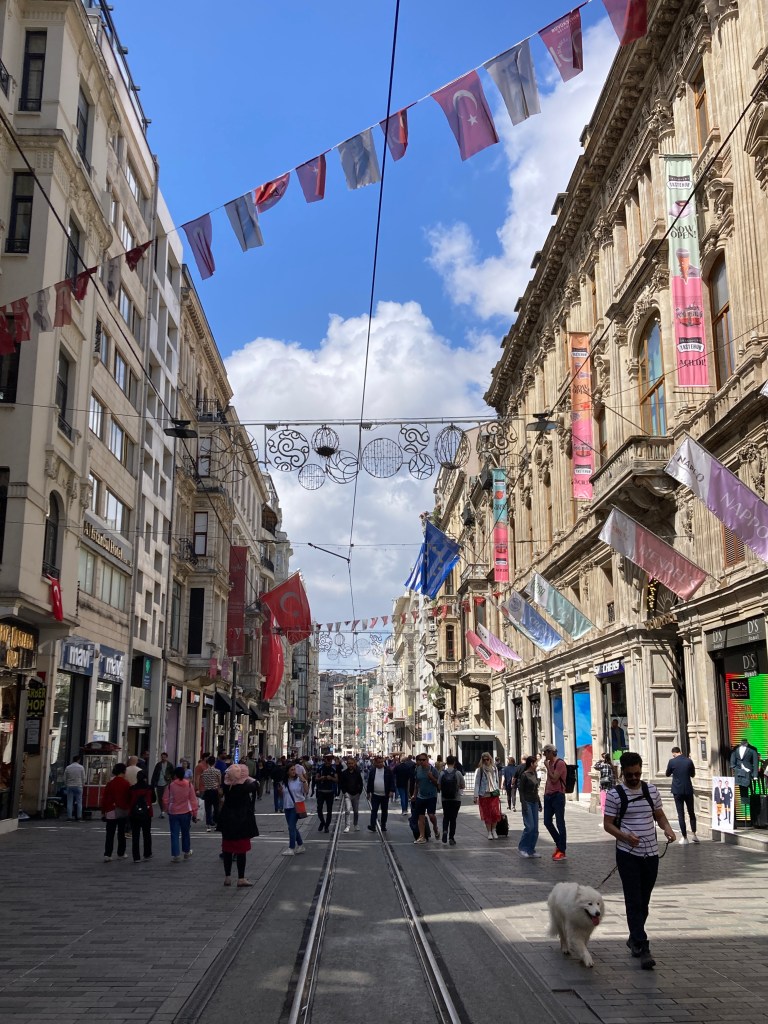
İstiklal Avenue, also known as Independence Avenue, is a 1.4 kilometer pedestrian street located in the historic Beyoğlu (Pera) district of Istanbul, Turkey. Renamed in honor of Turkey’s victory in the War of Independence on October 29, 1923, it is one of the city’s most renowned thoroughfares.
Beginning at Tünel Square in the northern part of Galata, the medieval Genoese quarter, İstiklal Avenue stretches southward to Taksim Square. Historically referred to as the Grand Avenue of Pera, it showcases a blend of late Ottoman era architecture, predominantly from the 19th and early 20th centuries. Architectural styles along the avenue range from Neo-Classical and Neo-Gothic to Renaissance Revival, Beaux-Arts, Art Nouveau, and First Turkish National Architecture. Additionally, there are several Art Deco buildings from the early years of the Turkish Republic, as well as modern architectural examples.
The buildings lining İstiklal Avenue house a variety of establishments, including boutiques, music stores, art galleries, cinemas, theatres, libraries, cafés, pubs, nightclubs, hotels, historical patisseries, chocolateries, restaurants, and international chain stores. Notable landmarks along the avenue include Galatasaray Square, home to the Galatasaray High School, the oldest secondary school in Turkey. A monument in the square commemorates the 50th anniversary of the founding of the Turkish Republic, erected in 1973.
İstiklal Avenue serves as the main thoroughfare, with narrow side streets branching off like ribs. Along or near the avenue, numerous historically and politically significant buildings can be found. These include Çiçek Pasajı (Flower Passage), bustling with lively restaurants and taverns; Balık Pazarı (The Fish Market), adjacent to the Armenian church of Üç Horan; Hüseyin Ağa Mosque; Roman Catholic churches such as Santa Maria Draperis and S. Antonio di Padova; the Greek Orthodox church of Hagia Triada; several academic institutions founded by Austria, France, Germany, and Italy in the 19th century; and the consulates (previously embassies until 1923, when they moved to the new capital of Ankara) of France, Greece, the Netherlands, Russia, Spain, and Sweden (the consulate of the United Kingdom is located just off İstiklal Avenue on Meşrutiyet Street).
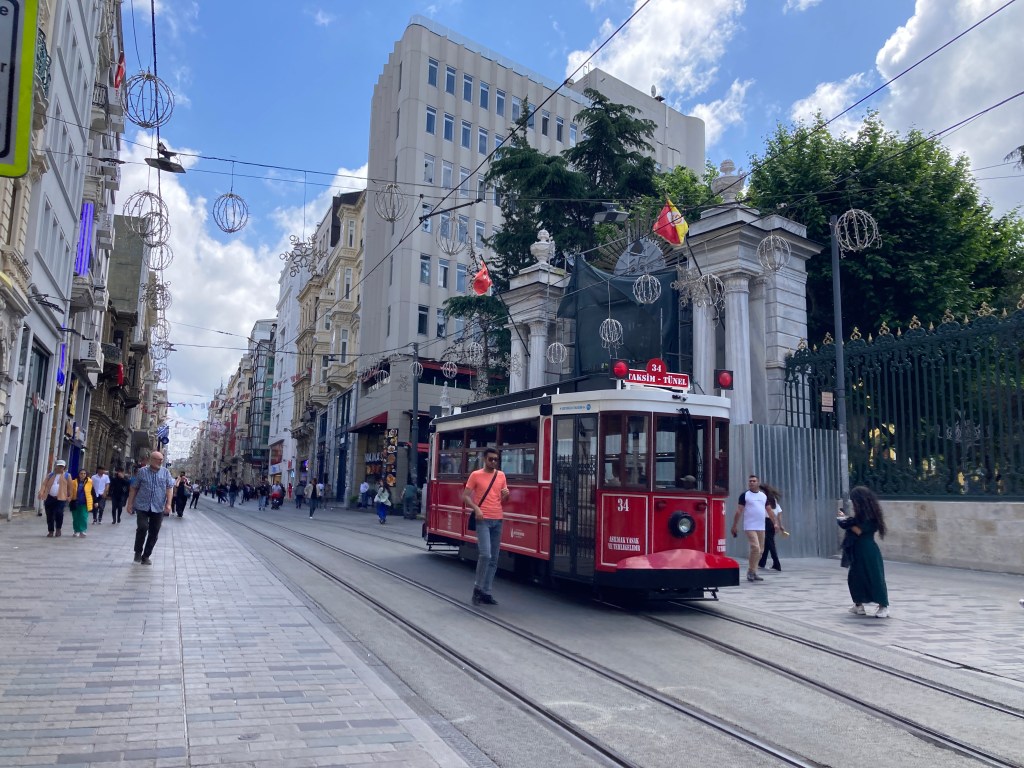
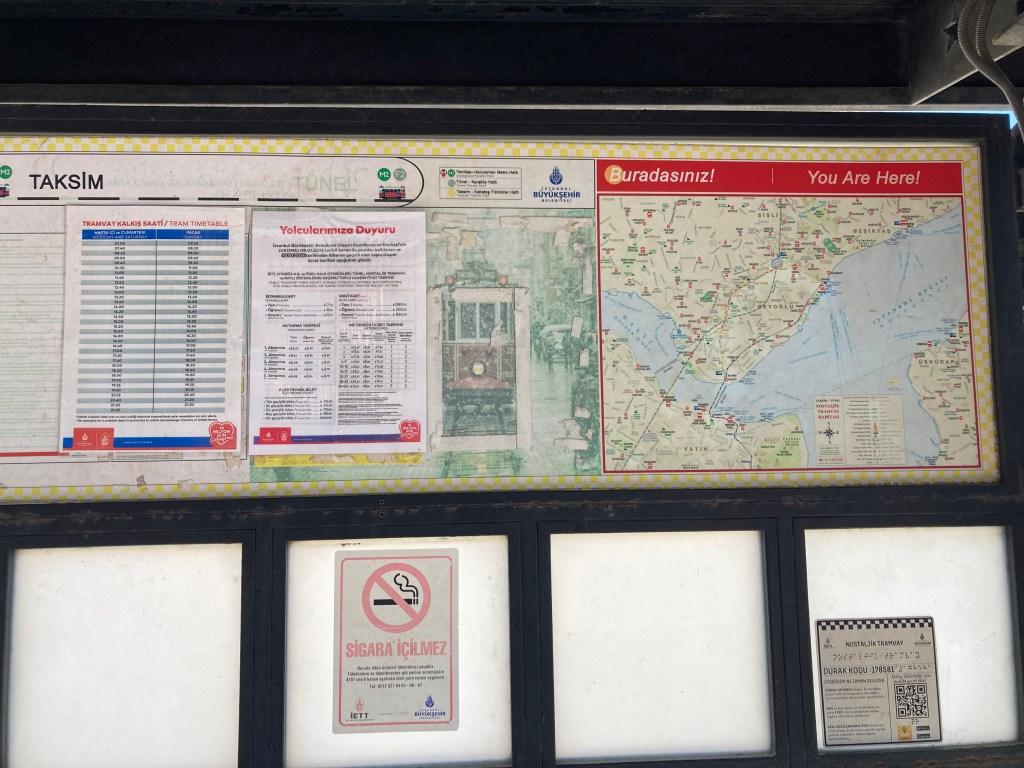
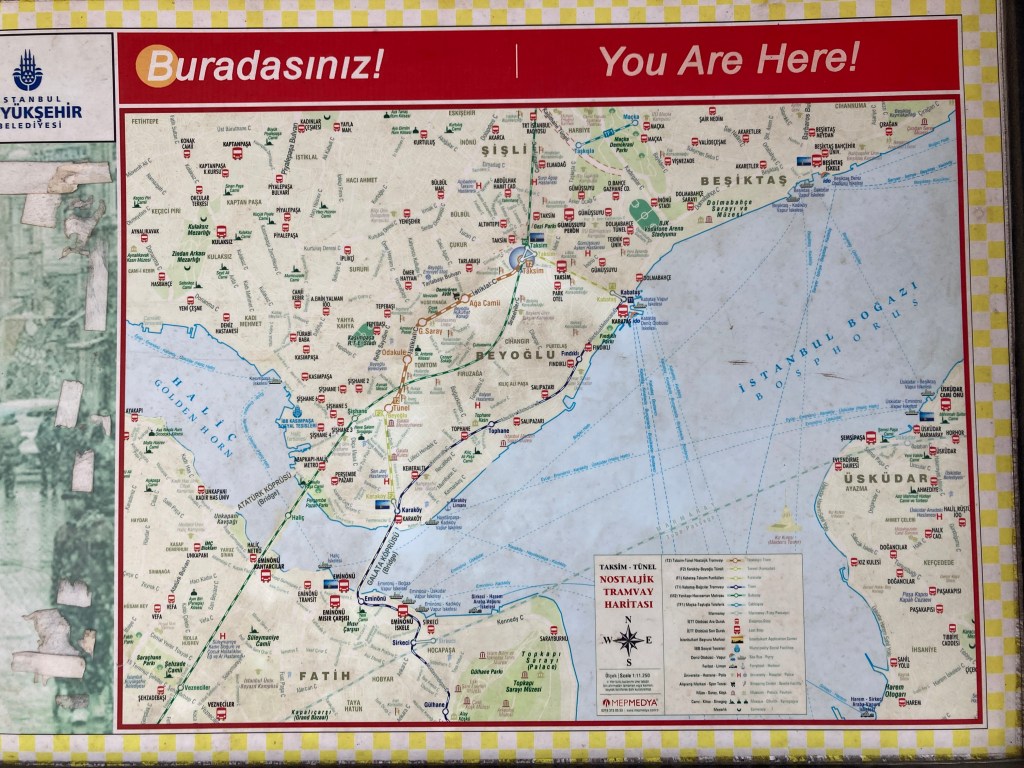
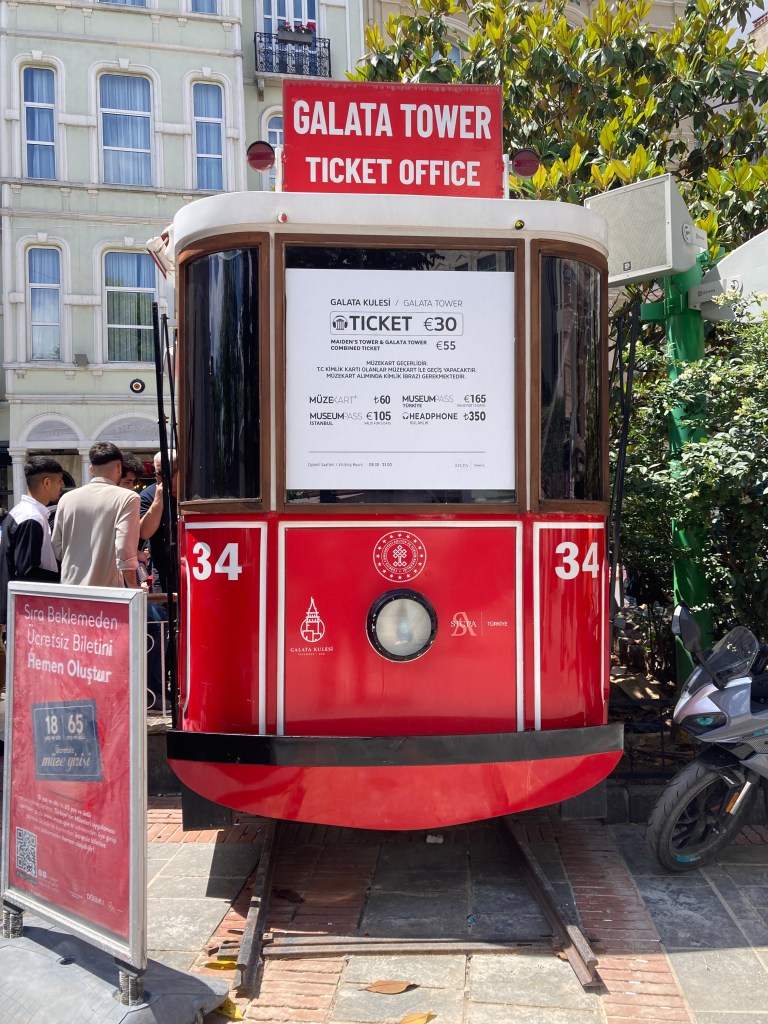
At the southern terminus of the avenue, visitors can access the Tünel (the Tunnel), the world’s second-oldest subway, which commenced operations in 1875 and transports passengers to Karaköy. Additionally, a picturesque red-and-cream tram operates along the street from Tünel to Taksim Square, with services running every 15 minutes.

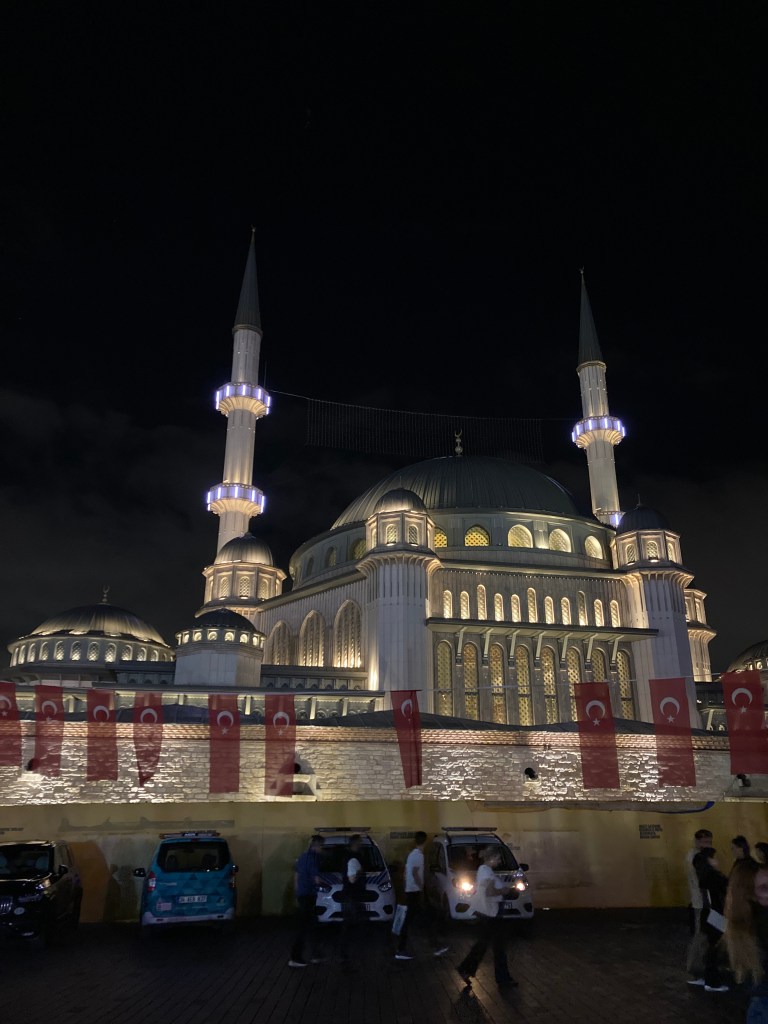
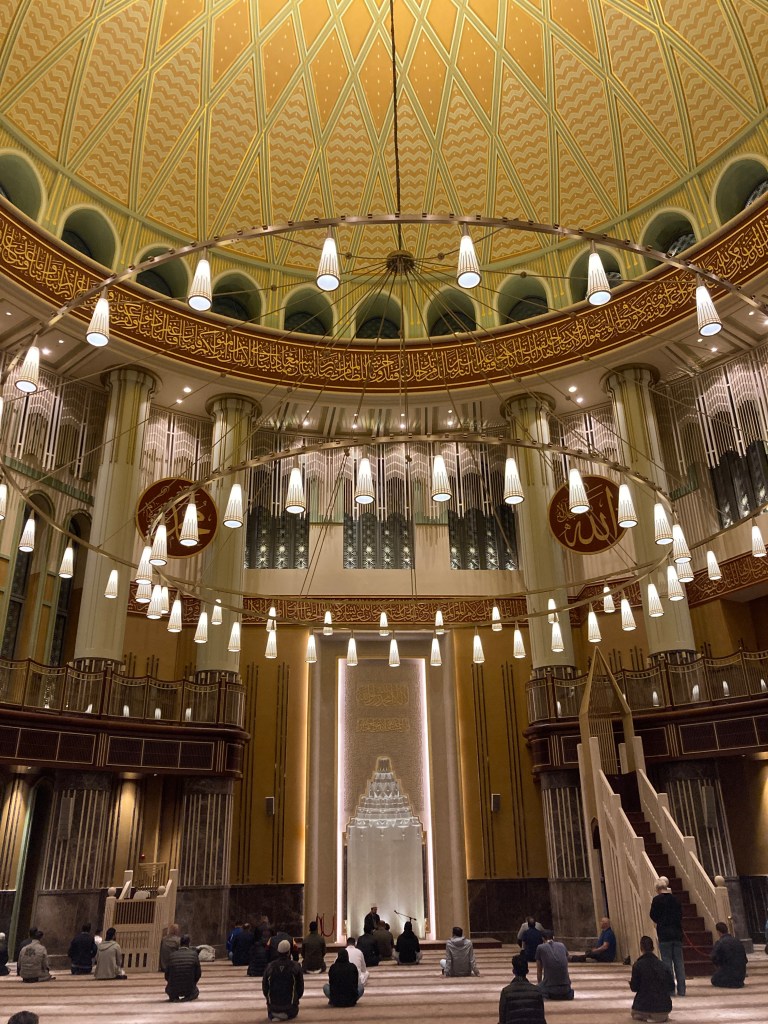
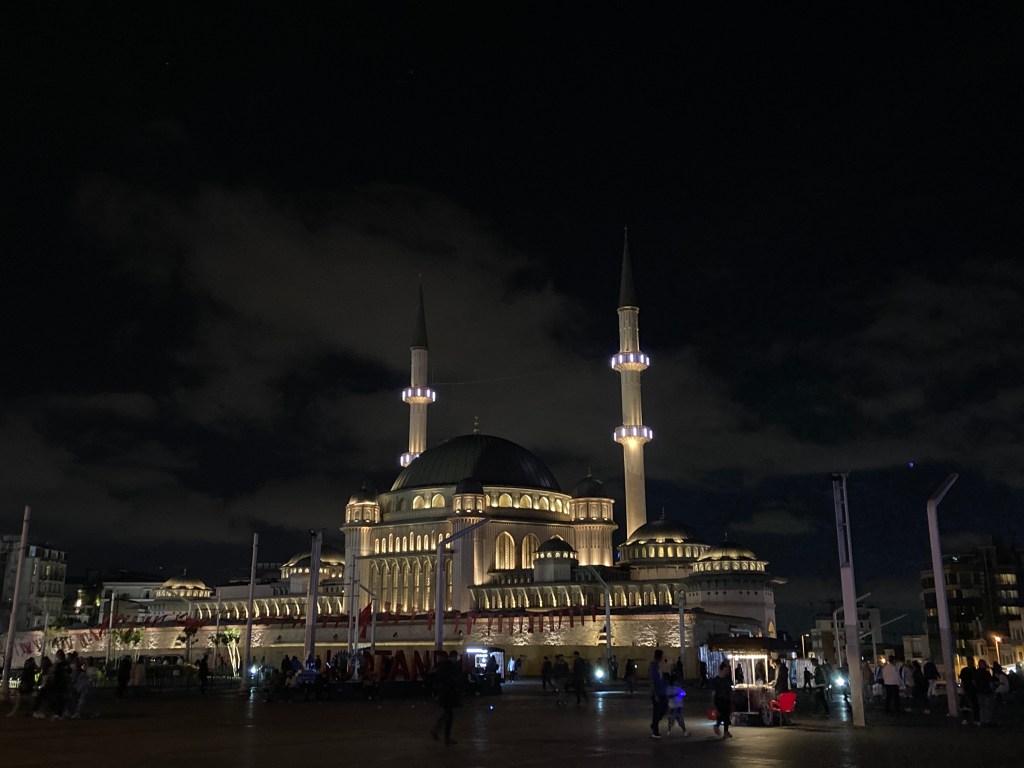
Taksim Mosque
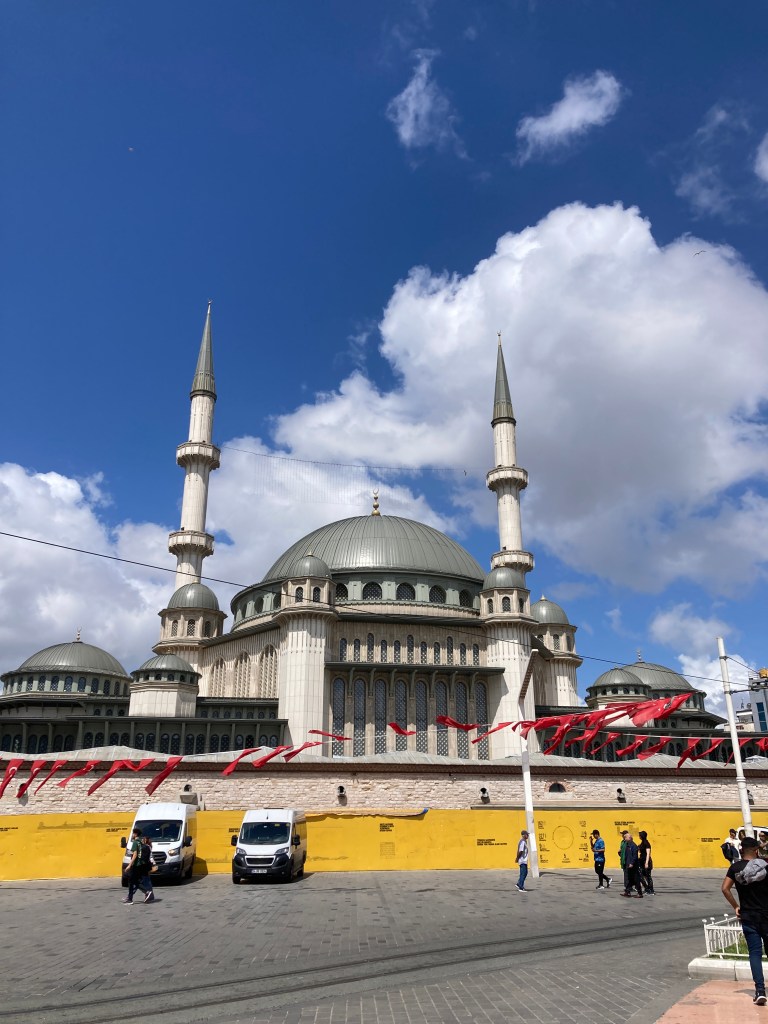
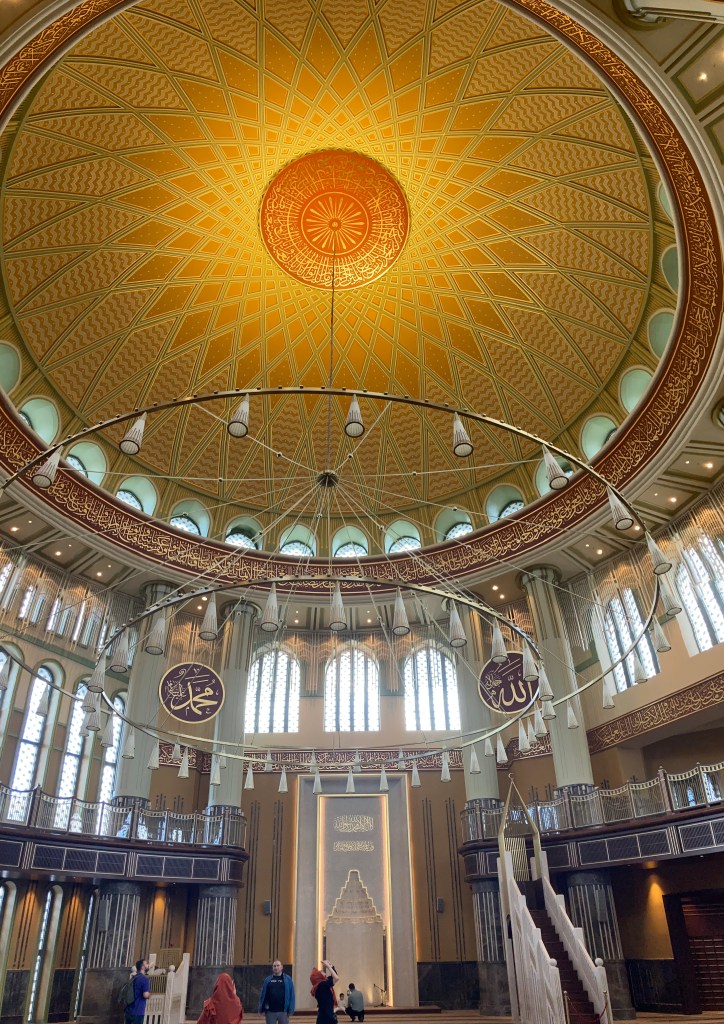
Taksim Mosque (Turkish: Taksim Camii) is a mosque complex situated in Taksim Square, Istanbul. Designed in the Art Deco style by two Turkish architects, it has the capacity to accommodate up to 3,000 worshippers simultaneously. Construction commenced on February 17, 2017, and was completed over a span of four years. The mosque was officially inaugurated with a Friday prayer, attended by President Recep Tayyip Erdoğan, on May 28, 2021.
The land upon which the mosque stands is currently owned by the Directorate General of Foundations.


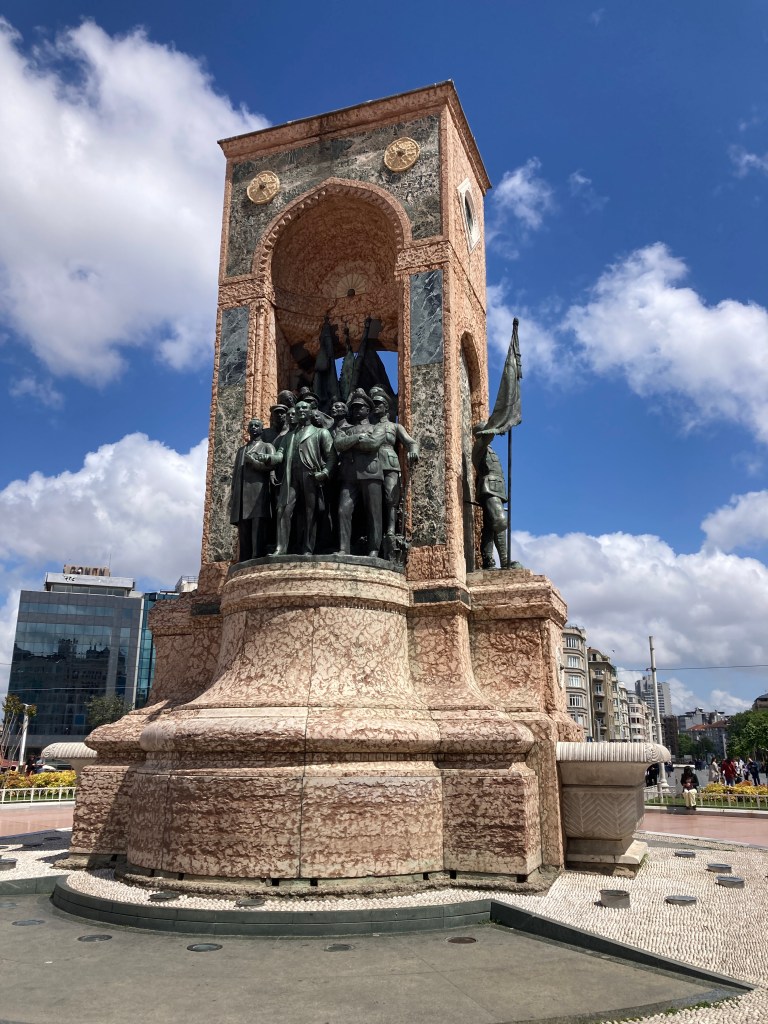
Taksim Republic Monument
The Republic Monument (Turkish: Cumhuriyet Anıtı) is a significant landmark situated in Taksim Square, Istanbul, Turkey, commemorating the establishment of the Turkish Republic in 1923.
Crafted by Italian sculptor Pietro Canonica and constructed over two and a half years with financial contributions from the public, it was unveiled by Dr. Hakkı Şinasi Pasha on August 8, 1928.
Standing at 11 meters (36 feet) tall, the monument depicts the founding figures of the Turkish Republic, prominently featuring Mustafa Kemal Atatürk, İsmet İnönü, and Fevzi Çakmak. The monument is dual-sided: the northern face portrays Atatürk in military attire during the Turkish War of Independence, while the southern face (facing İstiklal Avenue) showcases Atatürk and his associates dressed in contemporary Western clothing. This symbolism represents Atatürk’s dual roles as both a military leader and a statesman.
Semyon Ivanovich Aralov, the Ambassador of the Russian SFSR in Ankara during the Turkish War of Independence, is depicted among the group of figures behind Atatürk on the southern facade of the monument. His inclusion, as per Atatürk’s directive, highlights the financial and military assistance provided by Vladimir Lenin in 1920 during the Turkish War of Independence (1919–1922).
The Cumhuriyet Anıtı holds significant importance as a site for official ceremonies on national holidays.
Istanbul City Card
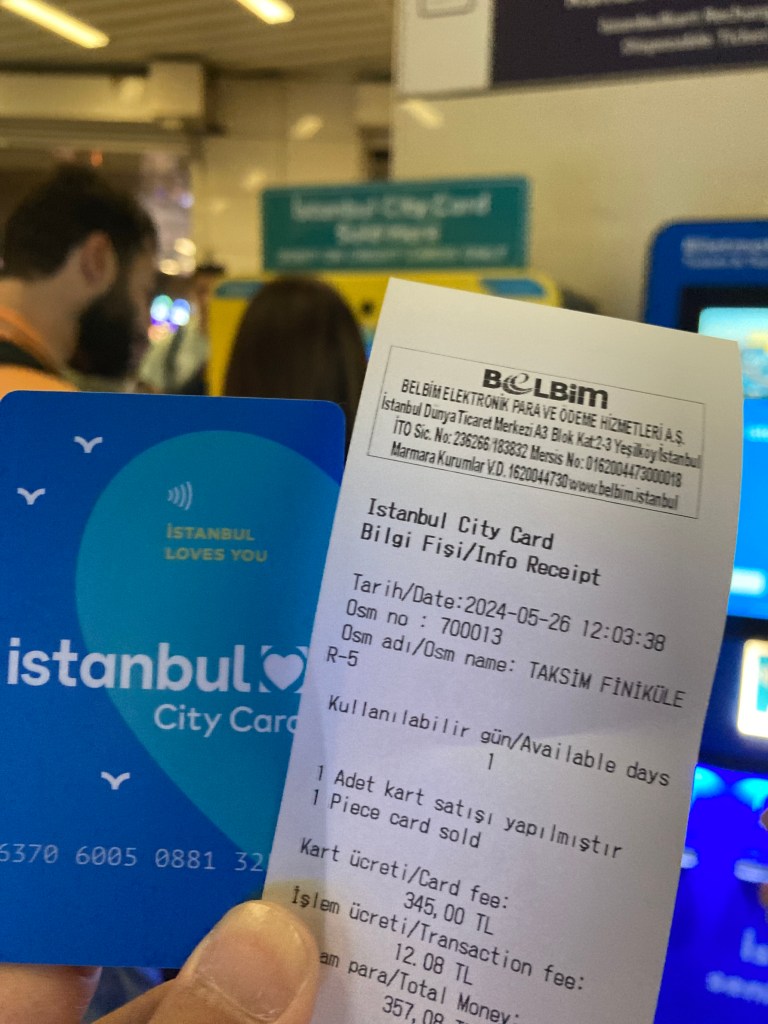
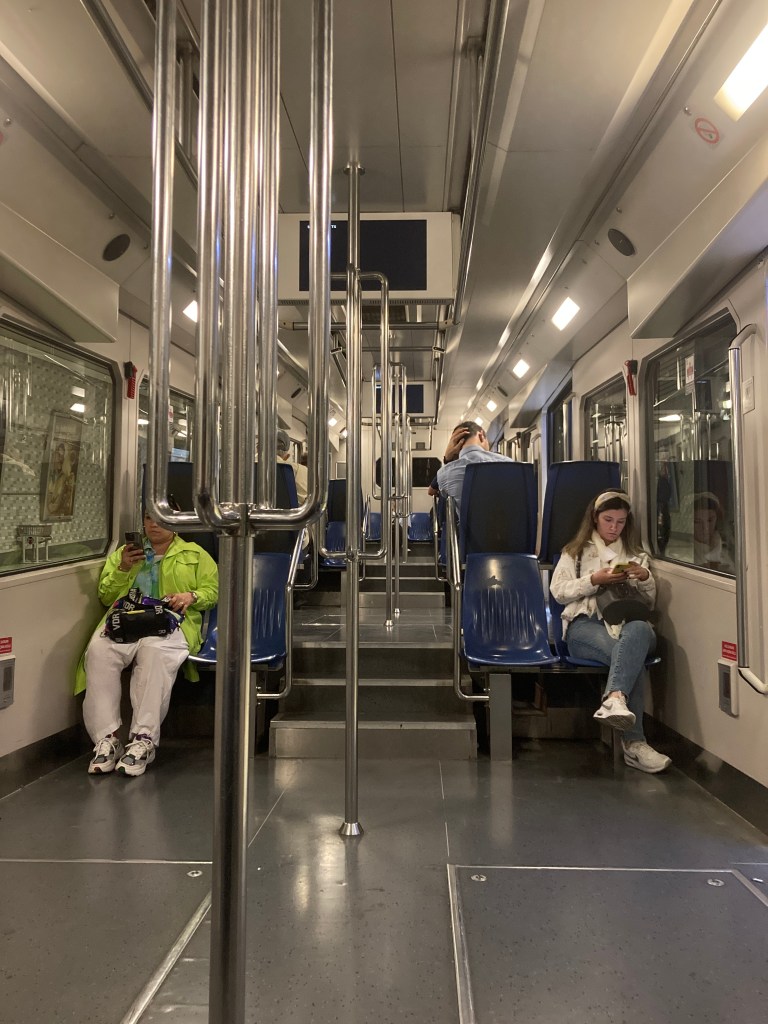
I bought a one-day unlimited ride city card for 357 lira. This card can be used on every mode of transportation, allowing unlimited rides, which is very convenient.
You need to buy this card at the ticket vending machines in the subway stations.
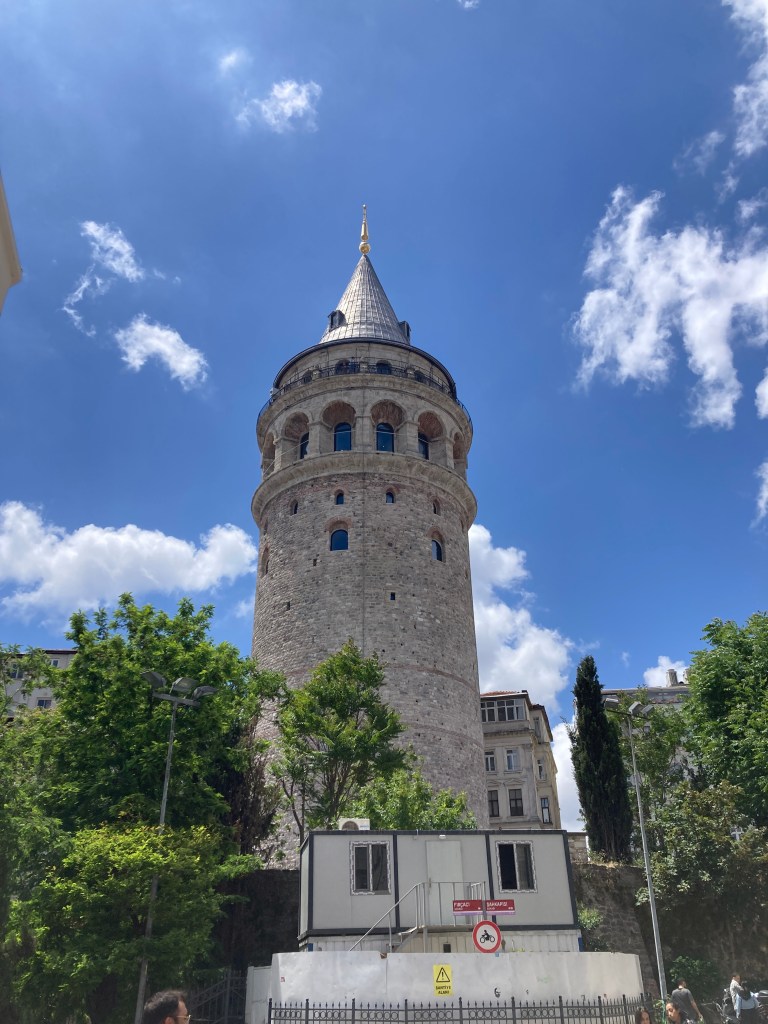
Galata Tower
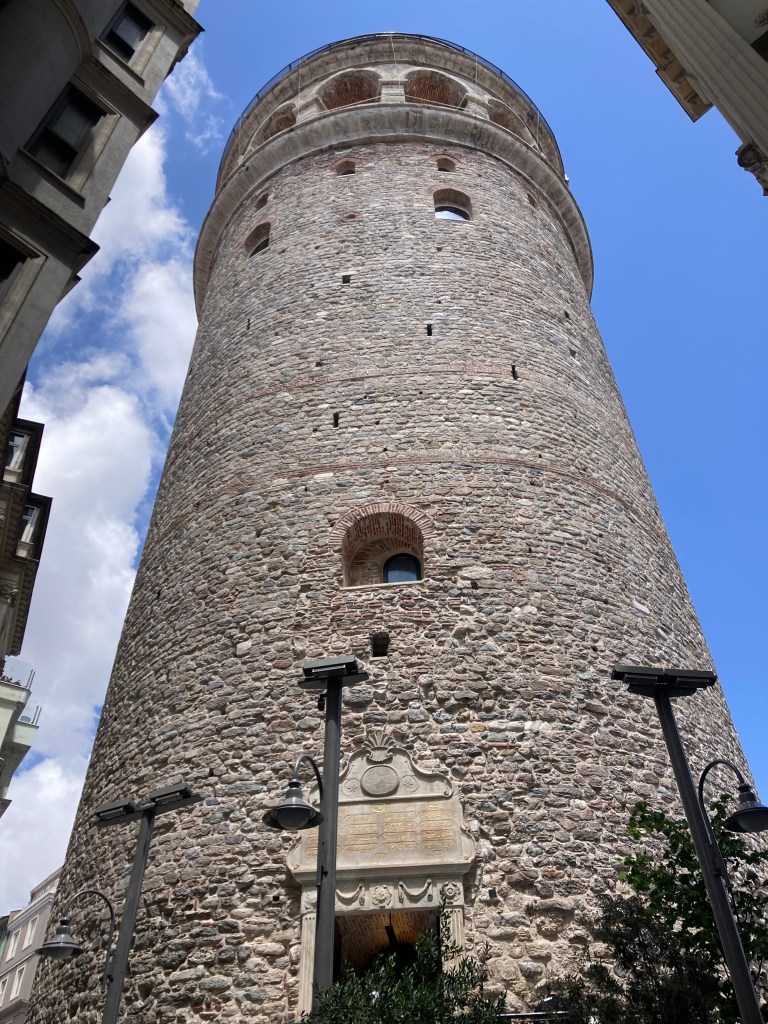
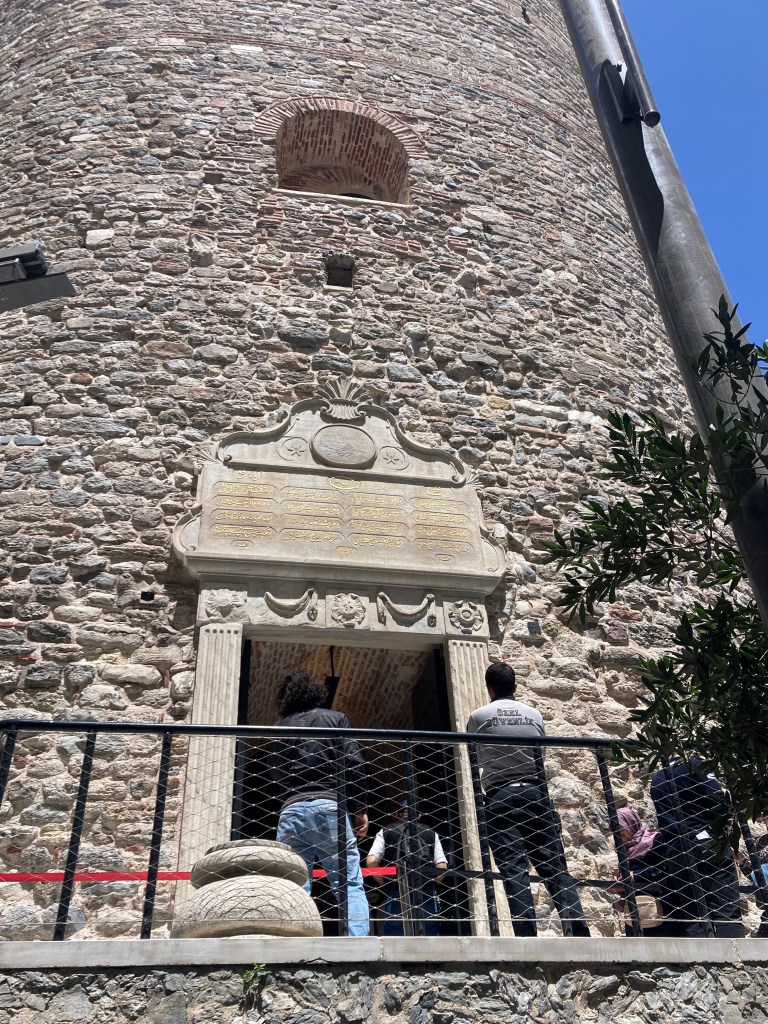
The Galata Tower (Turkish: Galata Kulesi), also known as the Galata Tower Museum (Turkish: Galata Kulesi Müzesi), is a historic Genoese tower located in the Galata area of the Beyoğlu district in Istanbul, Turkey. Originally constructed as a watchtower atop the highest point of the (now lost) Walls of Galata, the tower has been repurposed as an exhibition space and museum. It stands as an iconic symbol of both Beyoğlu and Istanbul.
During the Byzantine era, Emperor Justinian commissioned the construction of a tower in what would later become Galata. However, this tower was destroyed by Crusaders during the Sack of Constantinople in 1204.
In 1267, a Genoese colony was established in the Galata region of Constantinople. Encircled by walls, the Galata Tower, initially known as the Christea Turris (Tower of Christ), was erected at the highest point of the colony in 1348, in a Romanesque style. Standing at a height of 219.5 feet (66.9 meters), it became the tallest structure in the city.
Following the Ottoman conquest of Constantinople in 1453, the Genoese colony was dissolved. While most of the citadel’s walls were demolished in the 19th century during the city’s expansion northward into the Beyoğlu and Beşiktaş districts, remnants of the Genoese walls in Galata remain intact. The tower itself was spared and converted into a prison.
In 1638, legend has it that Hezarfen Ahmed Çelebi made the first intercontinental flight from the tower’s roof, landing in Üsküdar on the Asian side of the city. However, the authenticity of this tale is debated.
From 1717 onwards, the Ottomans utilized the tower as a lookout point for fires, while in 1794, Sultan Selim III reinforced its roof with lead and wood. The tower suffered damage from fires in 1831 and 1875, the latter resulting in the destruction of its conical roof. Although the tower remained roofless for the remainder of the Ottoman era, it was reconstructed during restoration work between 1965 and 1967. At this time, the tower’s interior was also replaced with a concrete structure, and it was opened to the public.
In 2020, the tower underwent a splendid restoration and was reopened as a museum, welcoming visitors and tourists to Istanbul. It is renowned for offering a 360-degree view of the city from its observation deck.

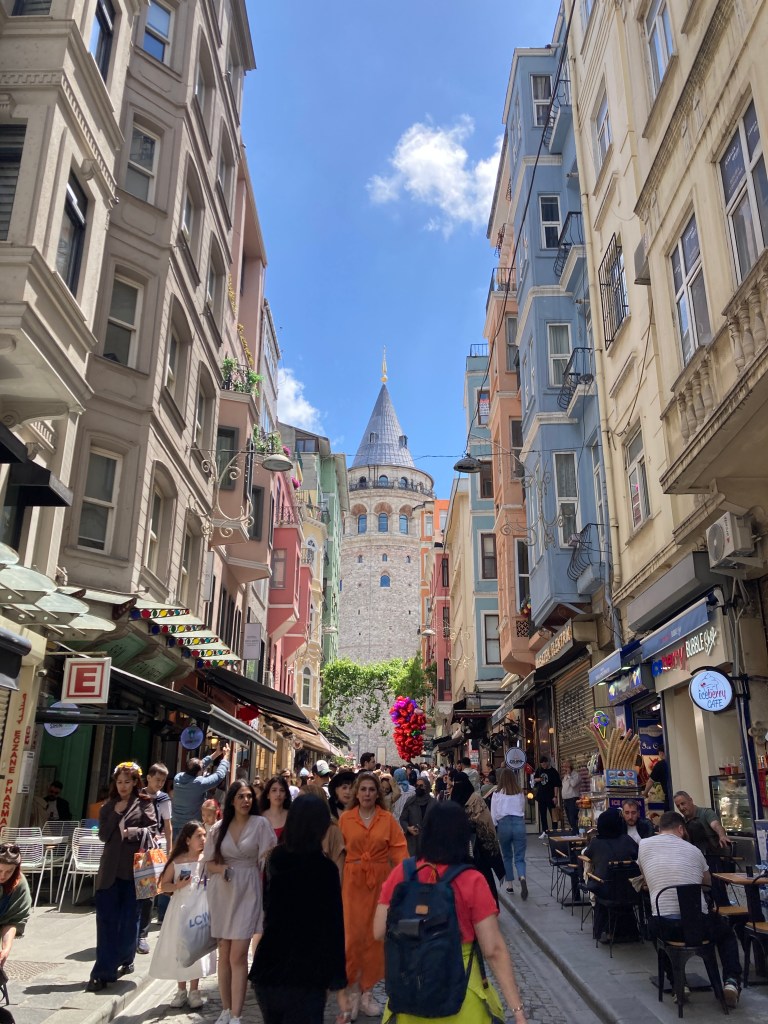
Near Istanbul University
Because I had an unlimited ride city card, I decided to wander around aimlessly and ended up near Istanbul University.
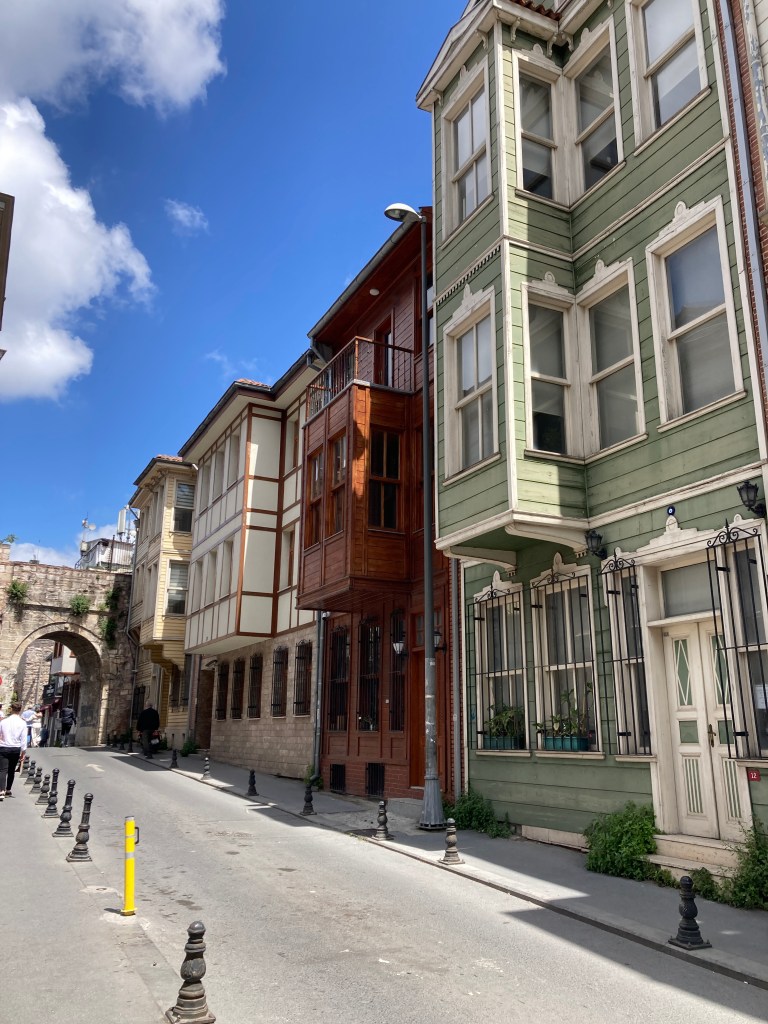
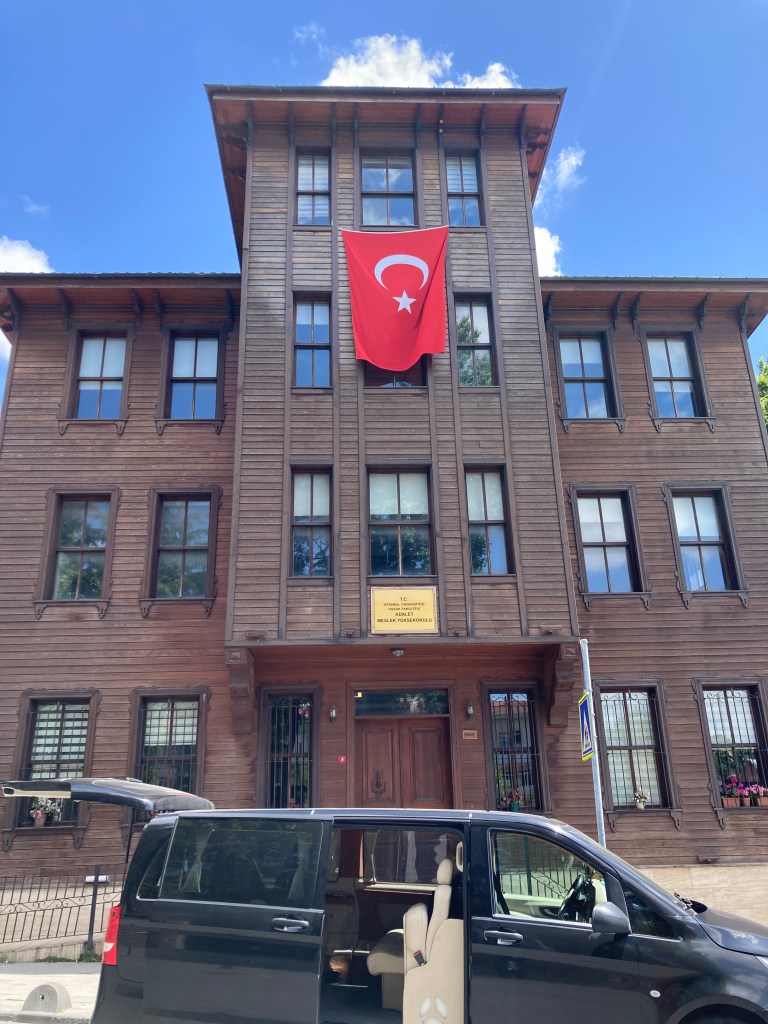
Sunset Cruise
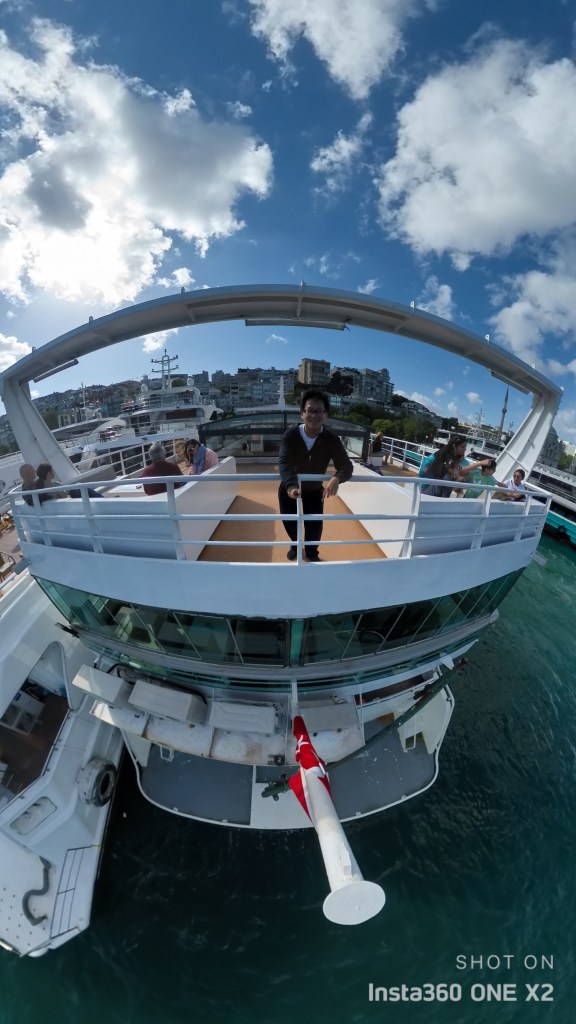
Taking a sunset cruise in Turkey. The weather that day was very cold, so we went downstairs to the restaurant to warm up


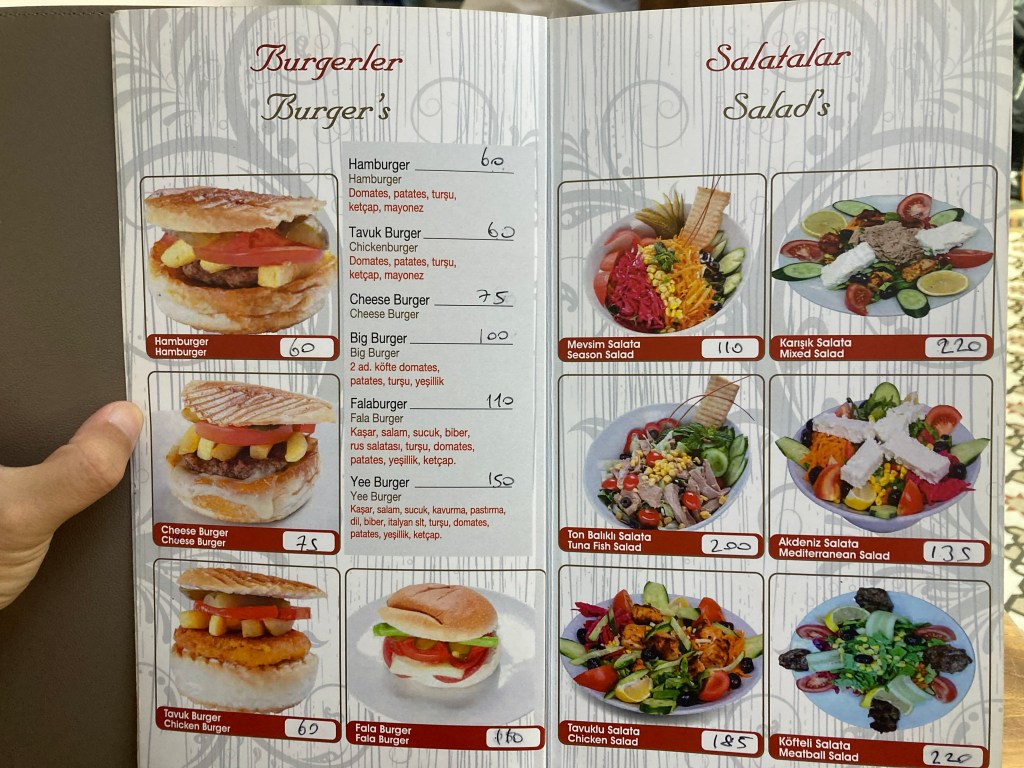
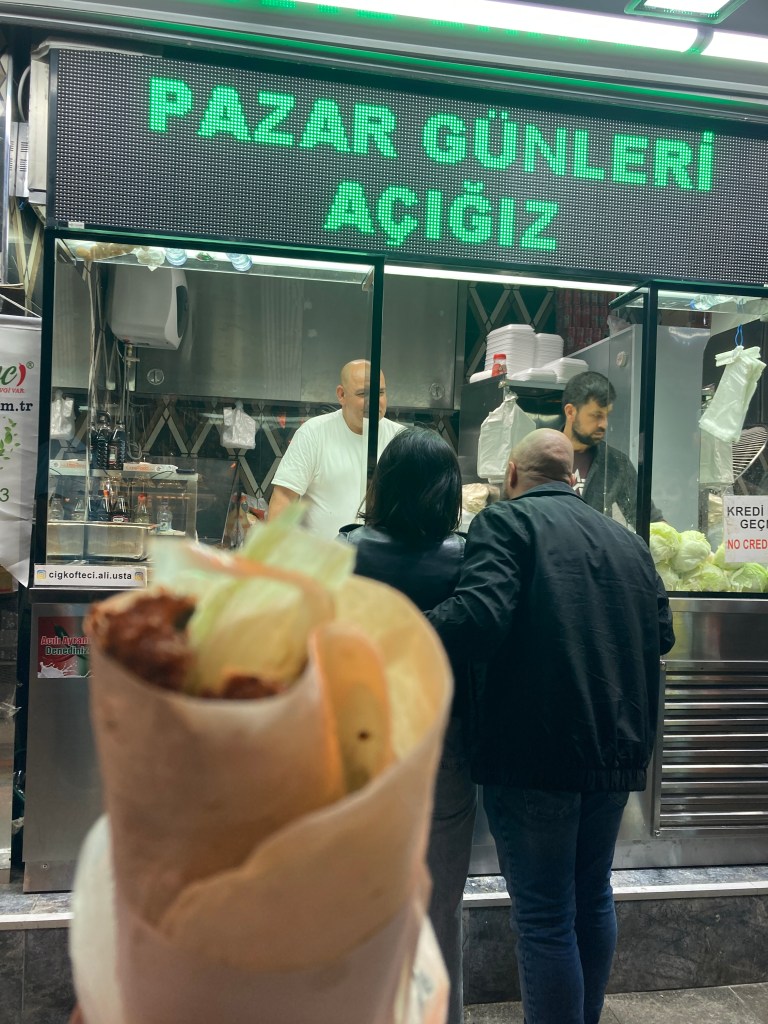
In the evening, I bought some street food that looked delicious, but I didn’t actually like it very much.
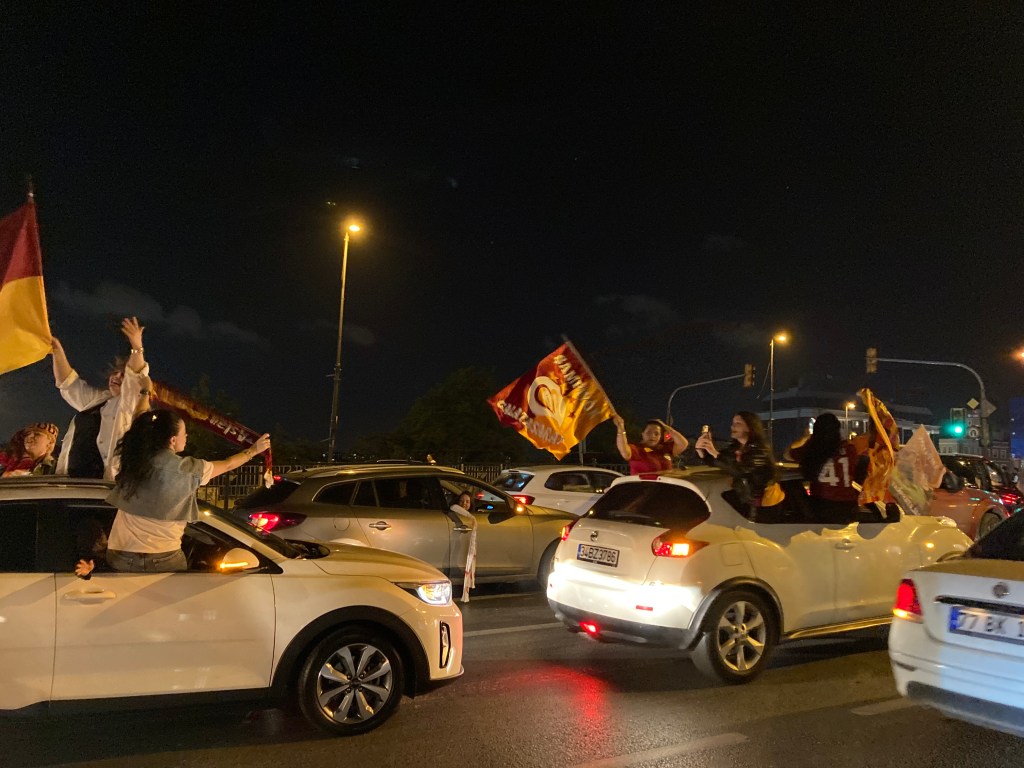
I pass by İstiklal Avenue every day because my hotel is nearby. On the way home in the evening, we saw many people celebrating wildly. From what I understand, a football match was won and the whole city was celebrating this victory enthusiastically.


Halıç
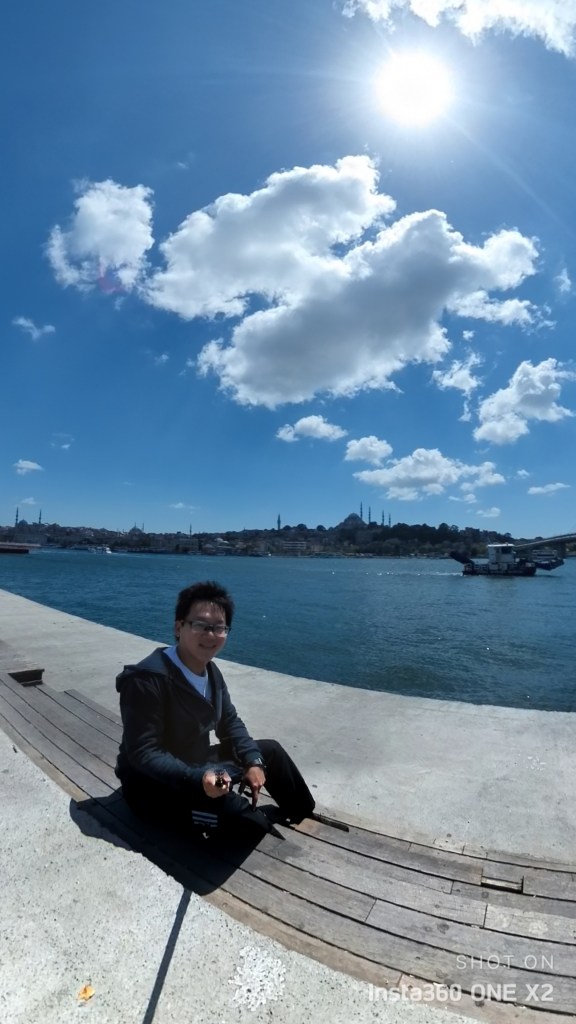
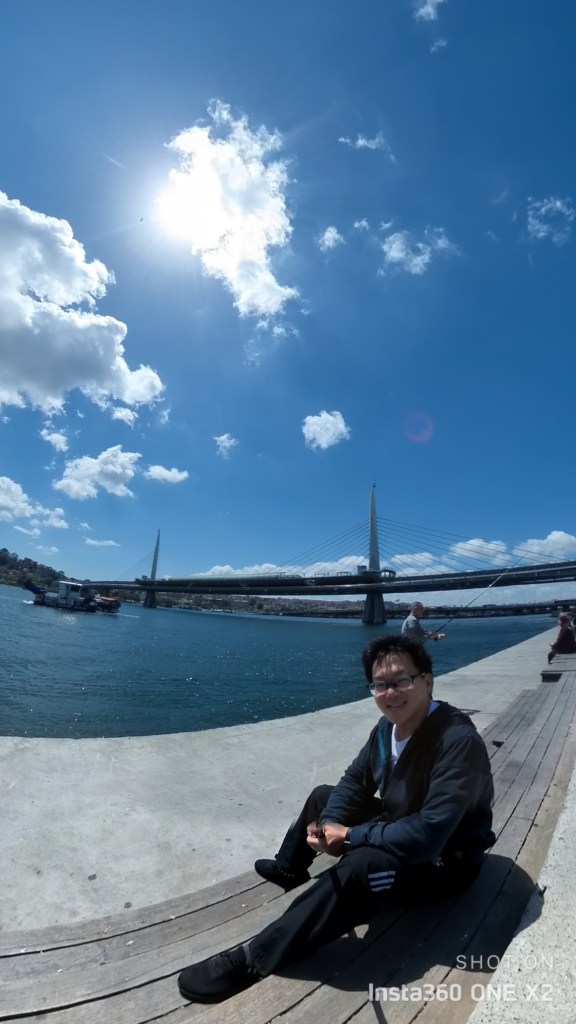
There is a subway station that is quite special, as it is located in the middle of the sea. This subway station is called Halıç. Getting off at this station allows you to admire the views on both sides of the river.

Vialand Theme Park
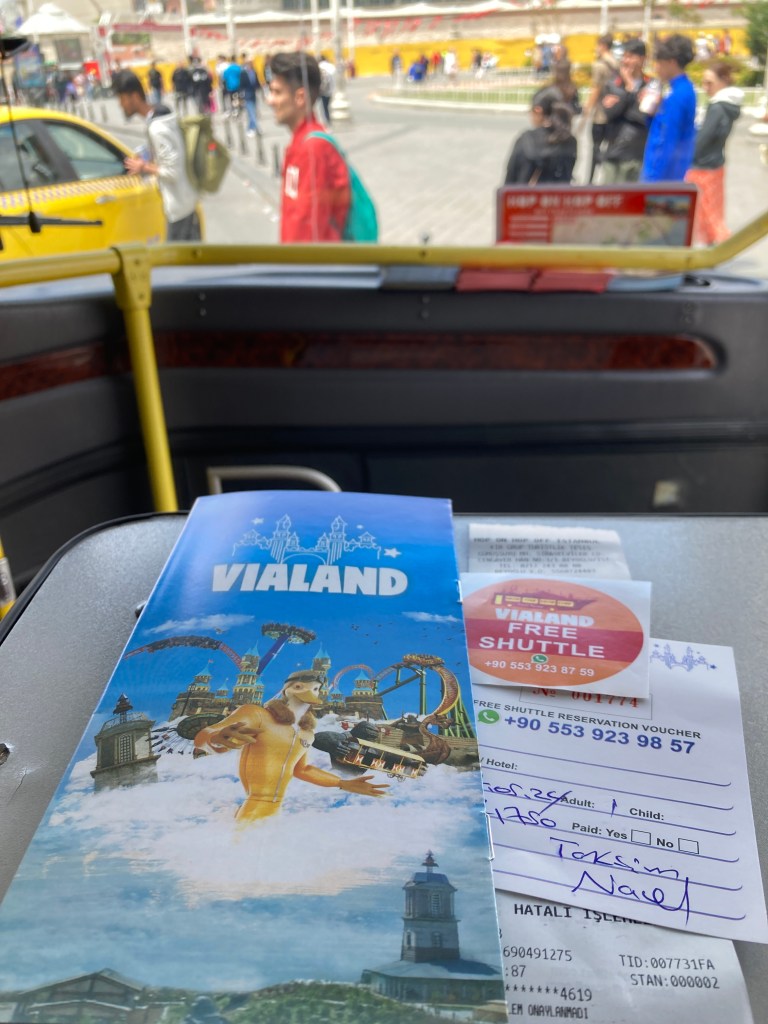
After having breakfast, we started today’s itinerary. Today, we’re going to the amusement park to relax.At Taksim Square, you can see ticket booths where the ticket price is $55, and there’s complimentary shuttle service.
VİALAND, the world’s first complex combining a theme park with a shopping mall and a show center, opened its doors to visitors on May 26, 2013, with an investment of $650 million. Operated by the Gürsoy Group and spanning over 600,000 square meters, VİALAND offers a wide range of brands in both open and closed shopping streets, catering to all ages and tastes.
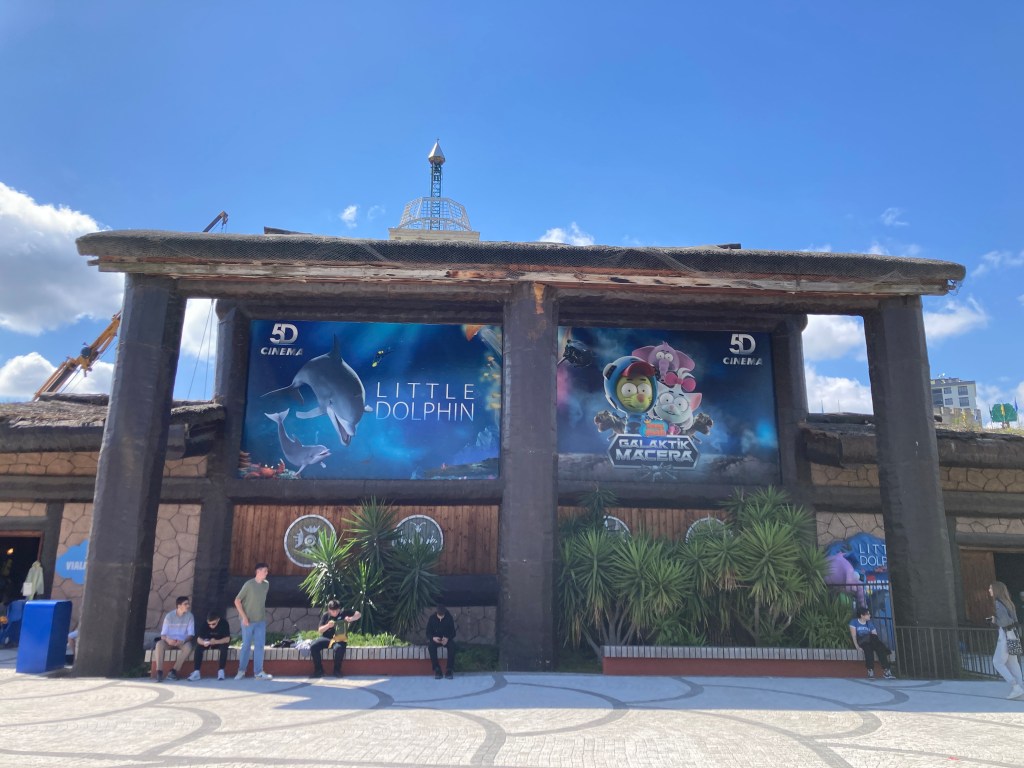
With a unique architecture featuring different storefronts, Vialand boasts over 200 stores across three-story open and closed shopping streets, complete with a nostalgic tram passing through. In addition to comfortable movie theaters and a bowling area for visitors’ enjoyment, Vialand offers parking space for up to 8,000 vehicles.
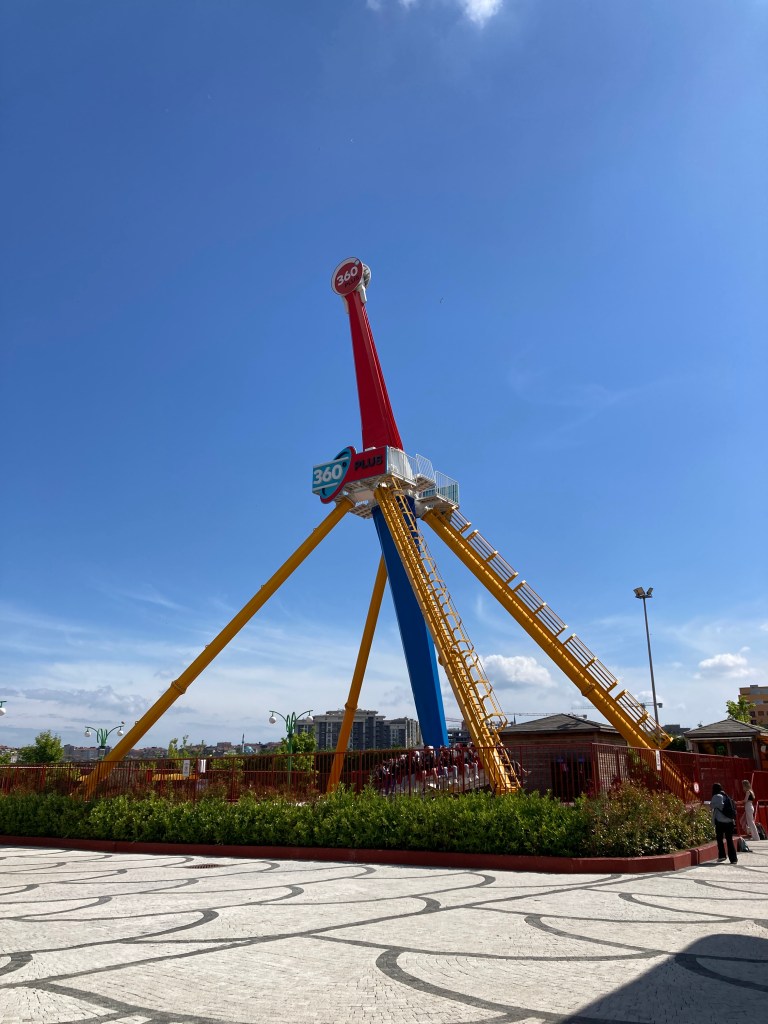
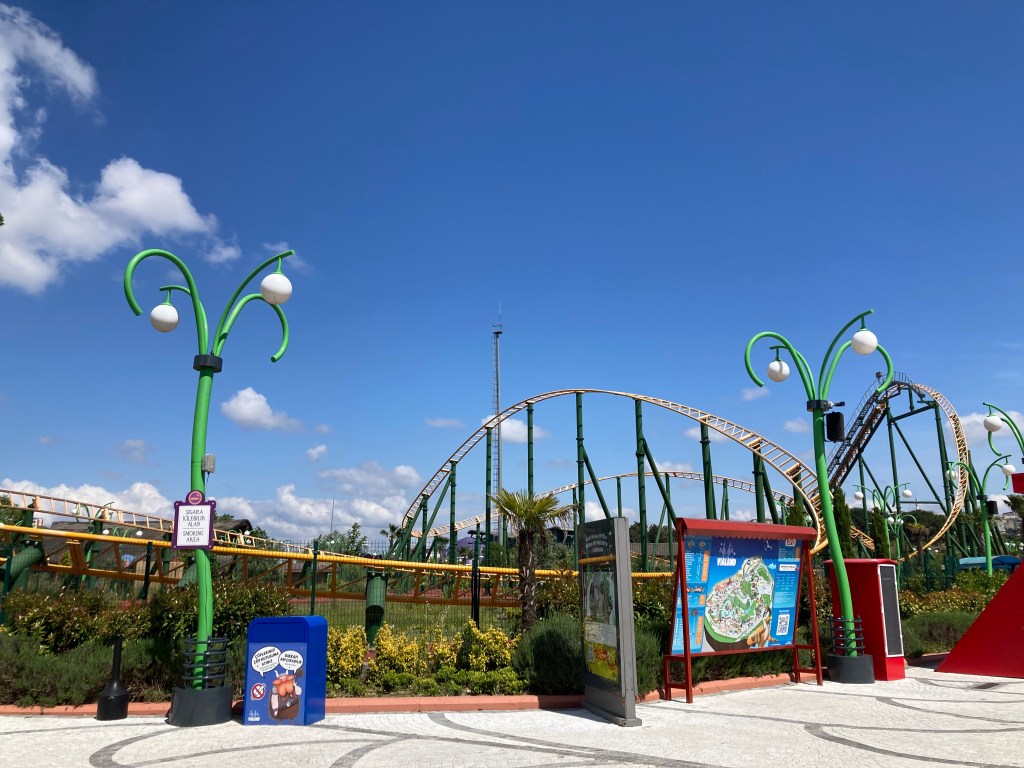
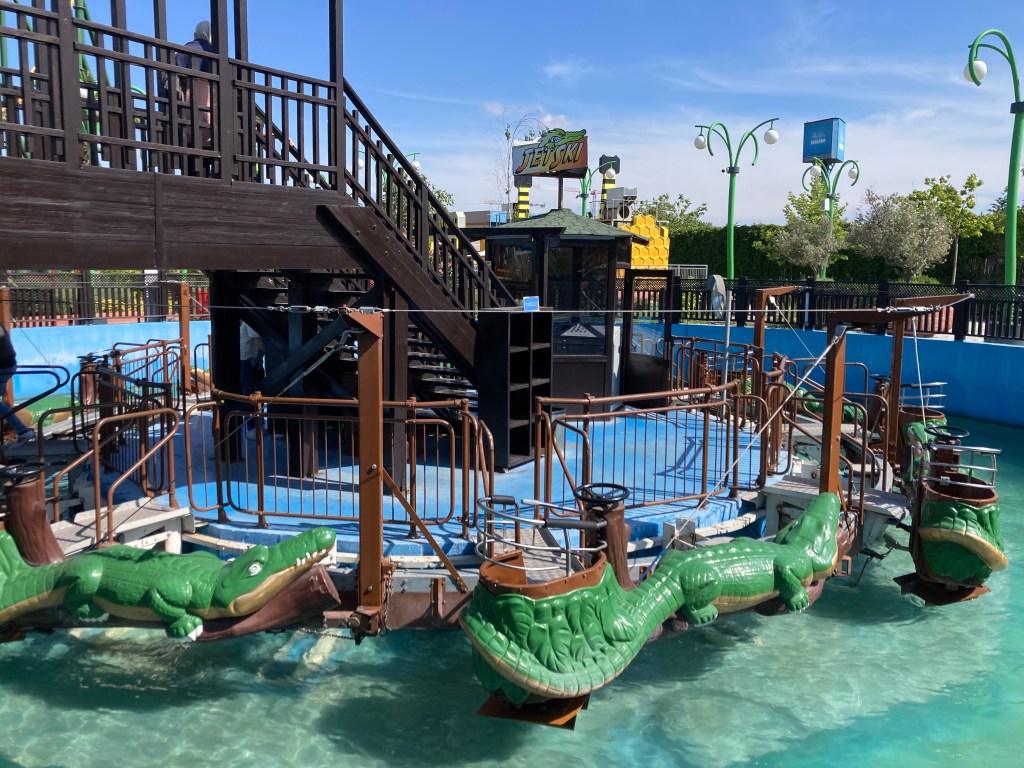
The theme park, situated on a 120,000 square meter area within Vialand, provides family entertainment for ages 7 to 70. Visitors are greeted by a magnificent fairy-tale castle and can experience thrilling rides such as the world’s 4th best Roller Coaster, accelerating to 110 kilometers in 3 seconds. Other attractions include the “Breathtaking, adrenaline-filled descent from 50 meters,” the “Tower of Justice” resembling King Kong, and the Viking. Special entertainment units like “Fatih’s Dream,” established on a 4,000 square meter area with a $20 million investment, continue to captivate guests.


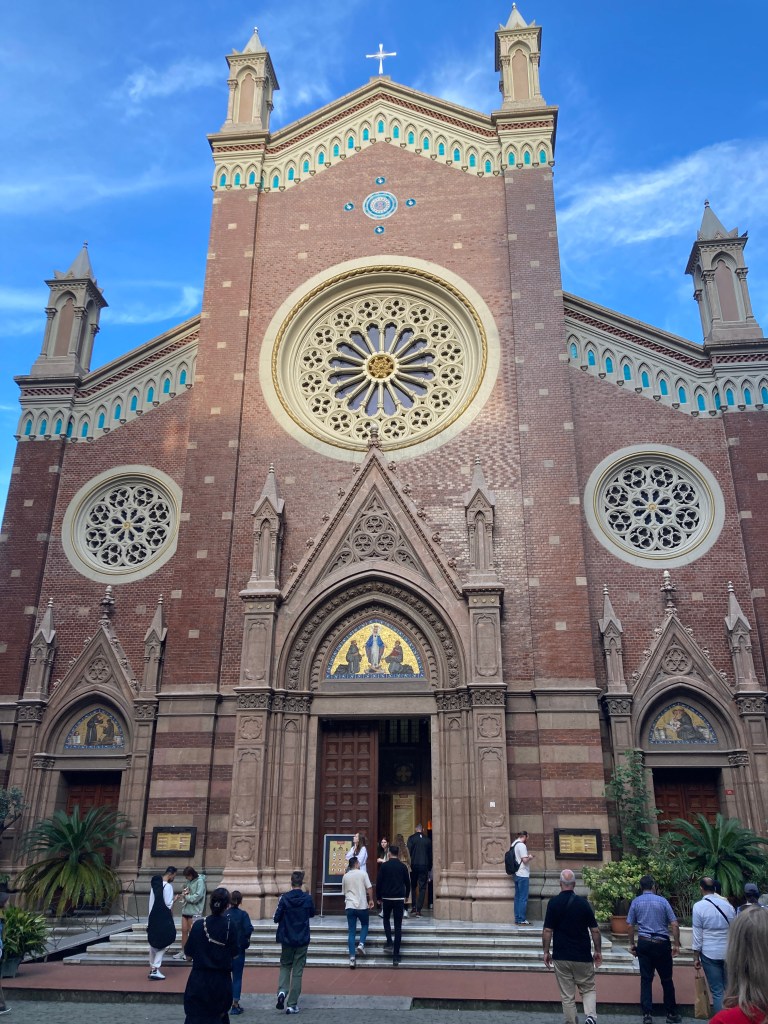
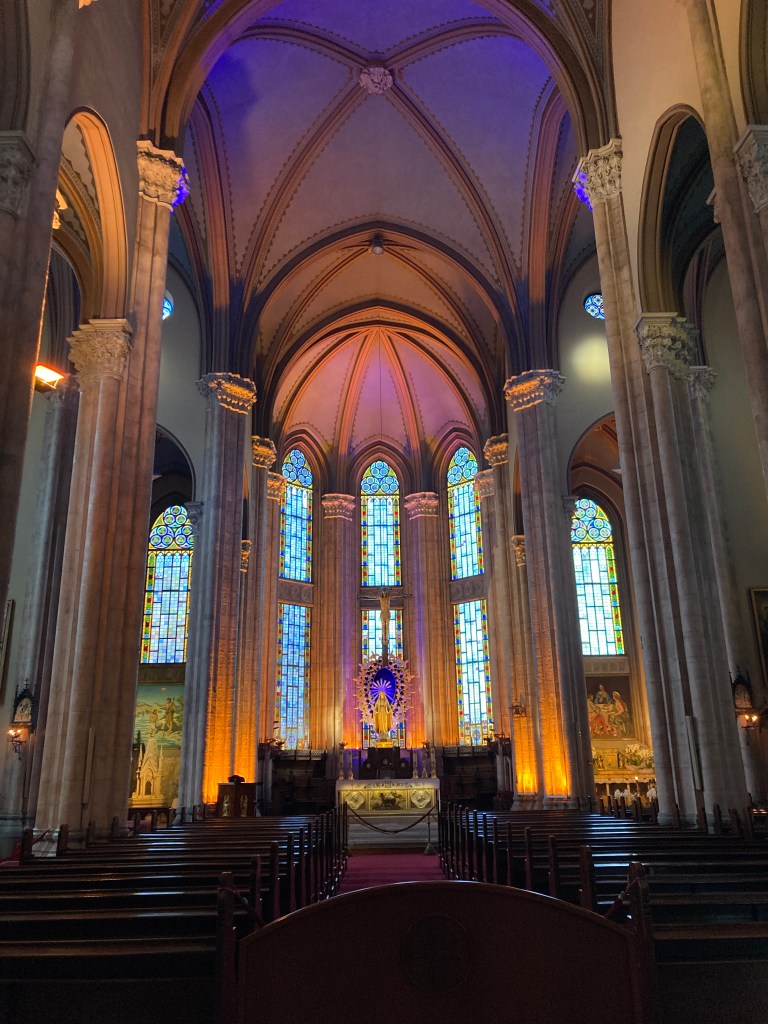
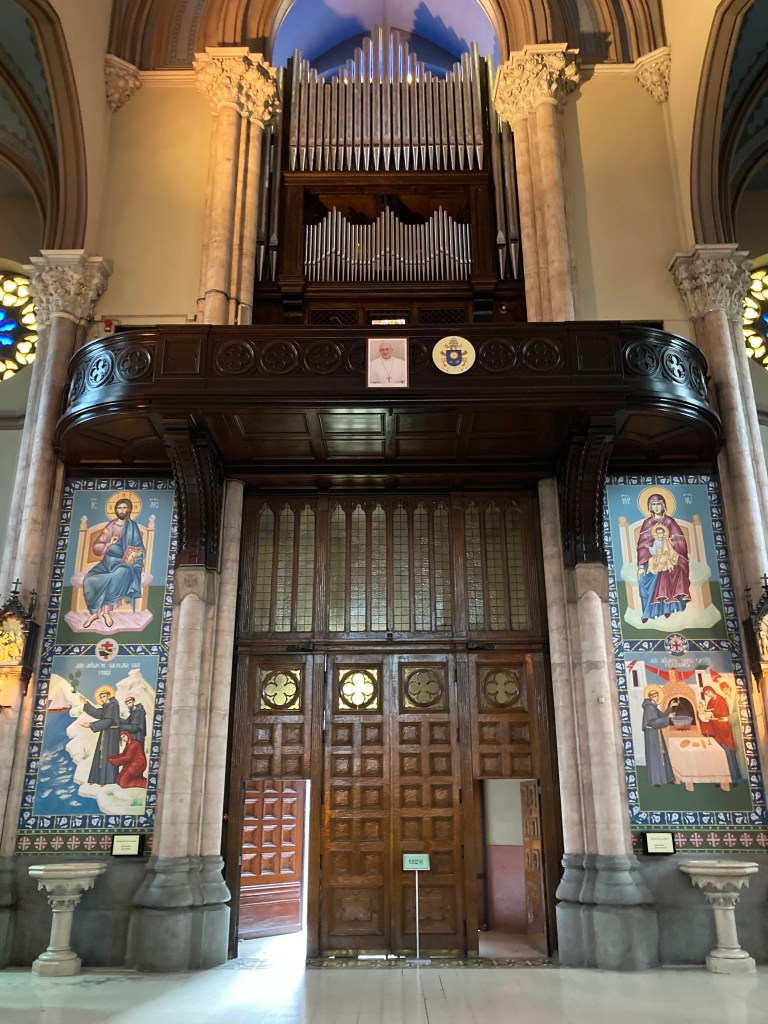
Church of St. Anthony of Padua, Istanbul
It is also located on İstiklal Avenue pedestrian street.
The Church of St. Anthony of Padua (Turkish: Sent Antuan Kilisesi), also known as Sant’Antonio di Padova Church or S. Antonio di Padova, stands as the largest Catholic church in Istanbul, Turkey. Situated on İstiklal Avenue in the Beyoğlu district, it is one of three Levantine parishes in Beyoglu, alongside the churches of St. Mary Draperis (also on Istiklal Avenue) and SS. Peter and Paul in Galata. Presently, the church is administered by Italian priests.
The church offers Mass services in various languages, including English, Italian, Polish, and Turkish. Saturday Mass in English commences at 19:00, Sunday Mass in Italian is held at 11:30, with a Polish Mass at 11:30 in the crypt, an English Mass at 10:00, and a Turkish Mass at 19:00. Additionally, Tuesday Mass in Turkish begins at 11:00. Weekday Masses are conducted in English at 8:00 and in Turkish at 19:00.
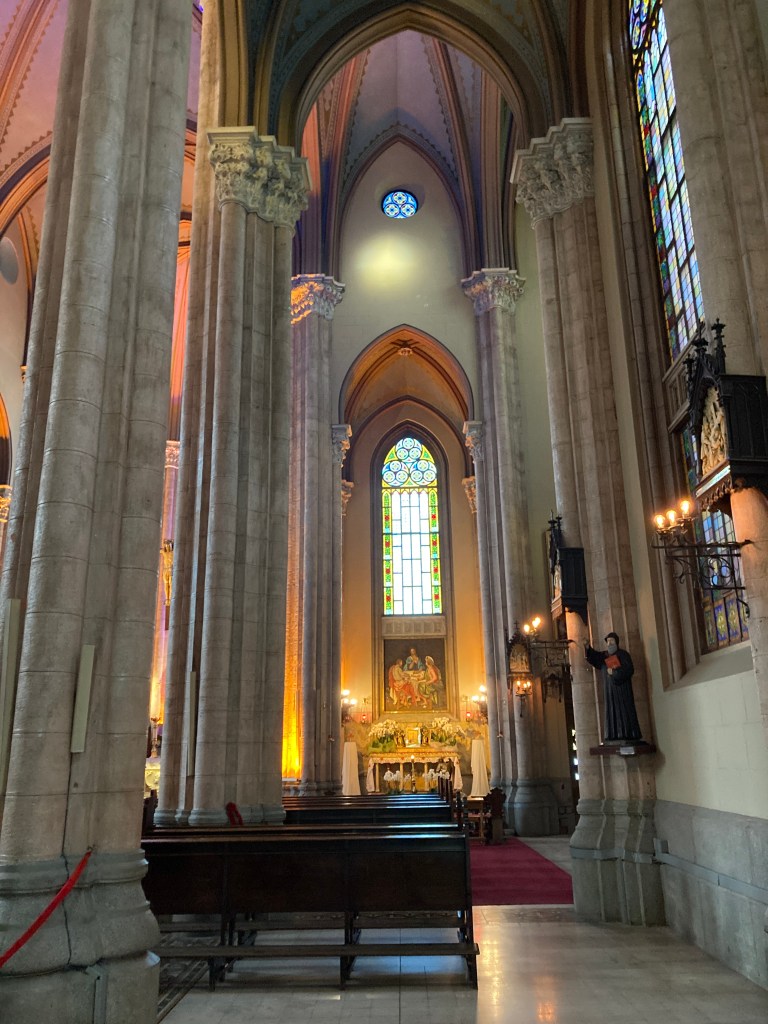
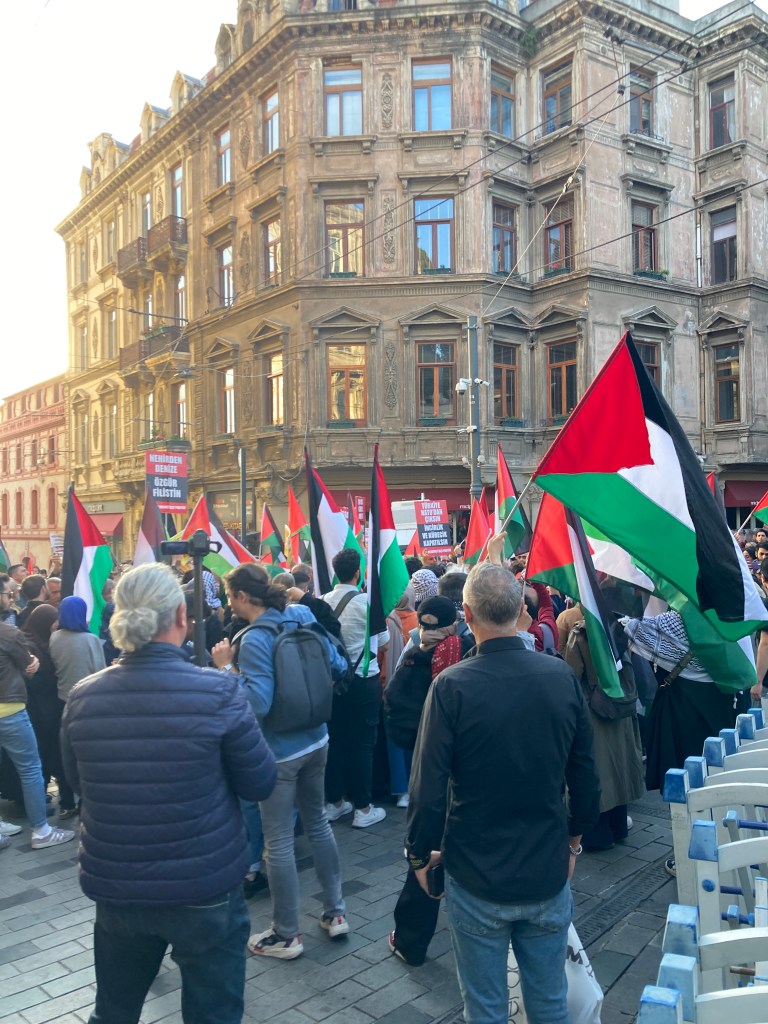
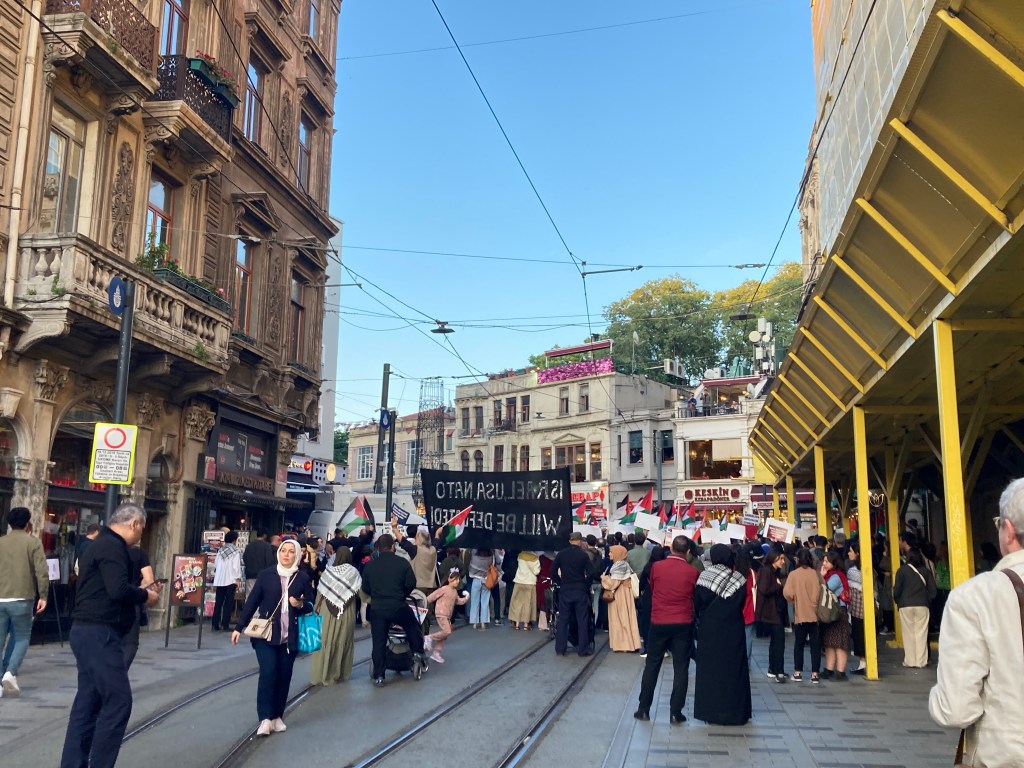
Yesterday, there was a crowd celebrating the football victory, and today, on the pedestrian street, I also saw a crowd protesting for Palestine.
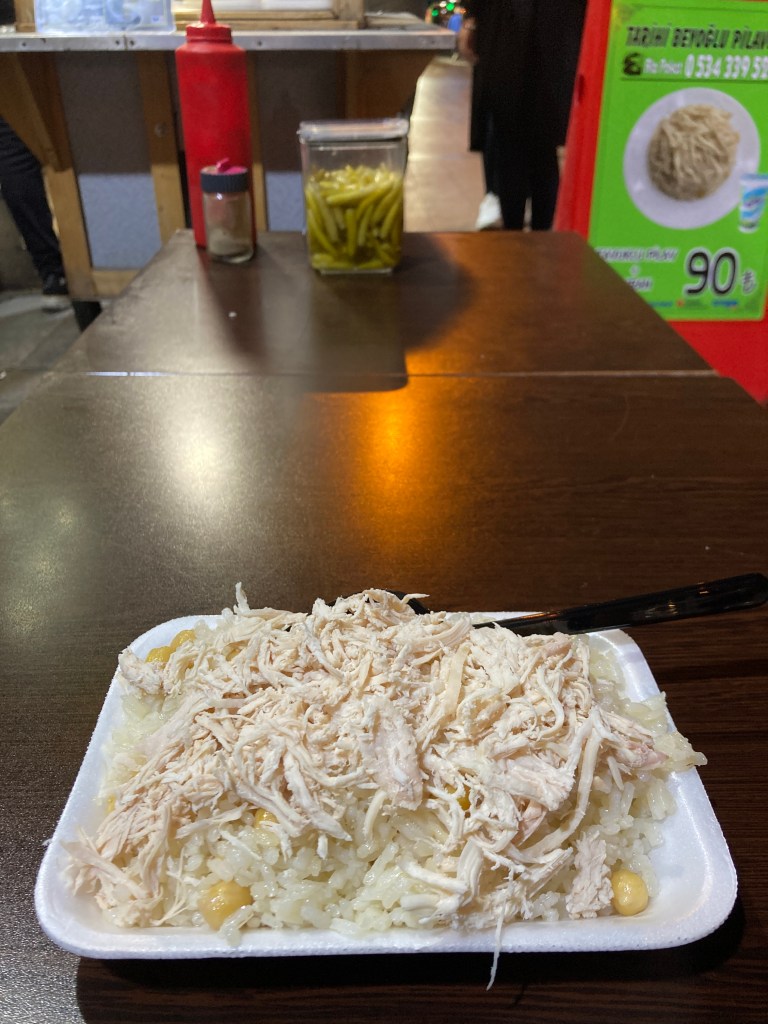
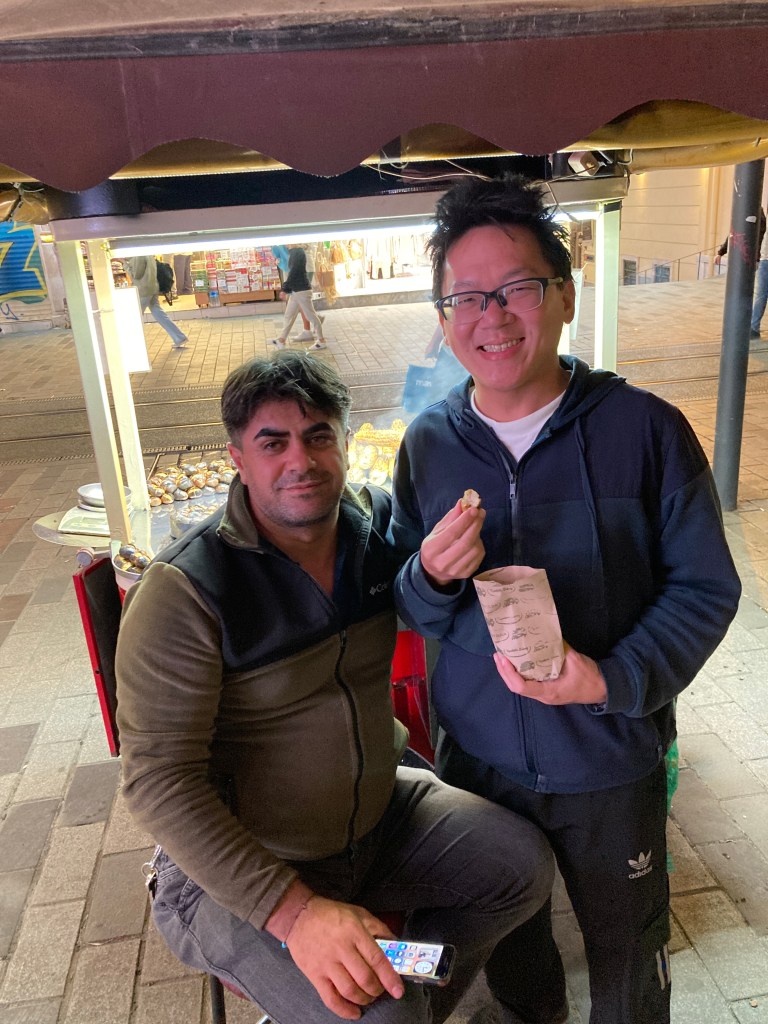
Tonight, I decided to eat traditional Turkish street food from a roadside stall.
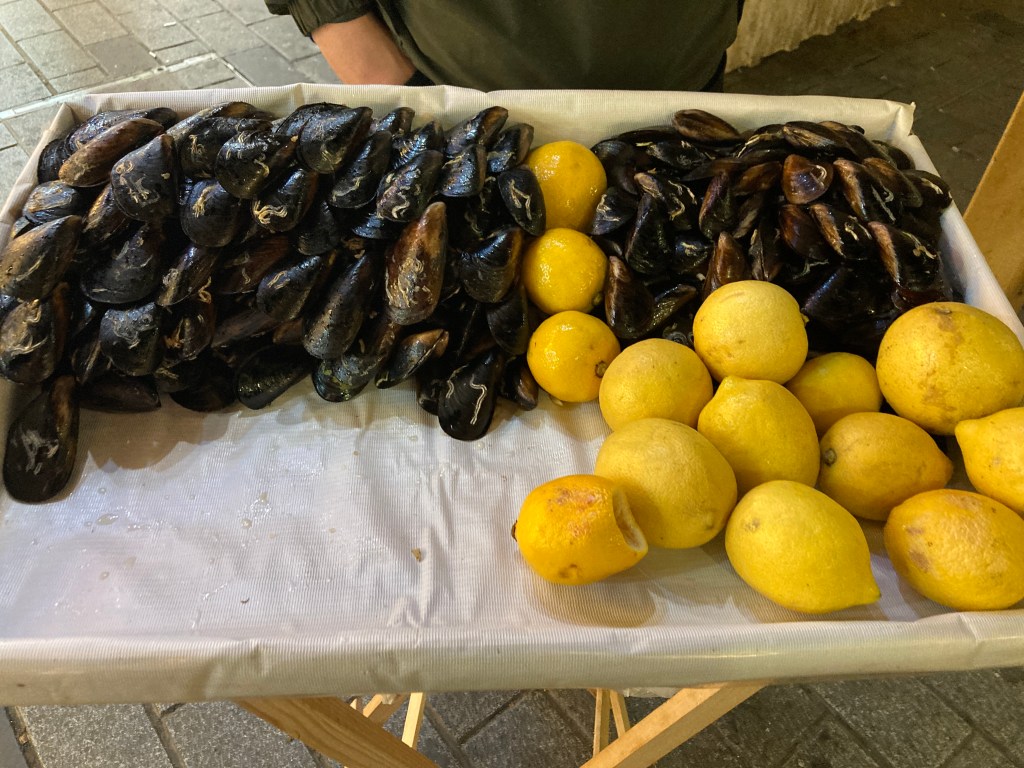
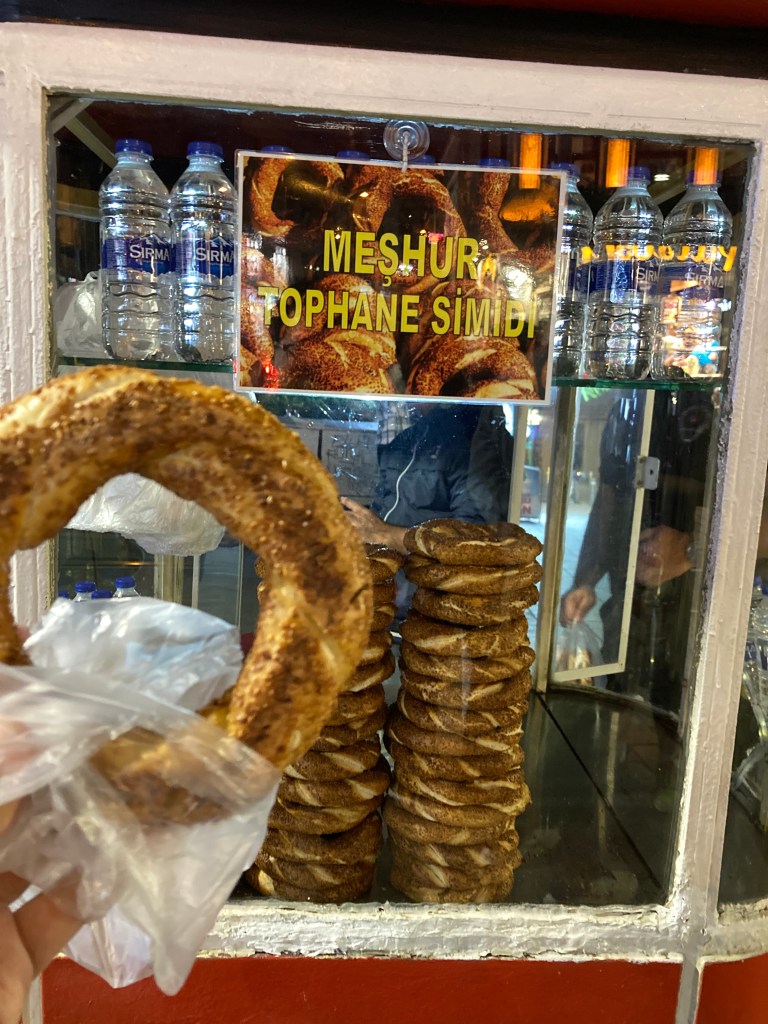

And then to see the difference between Taksim Mosque during the day and at night.
The Grand Bazaar
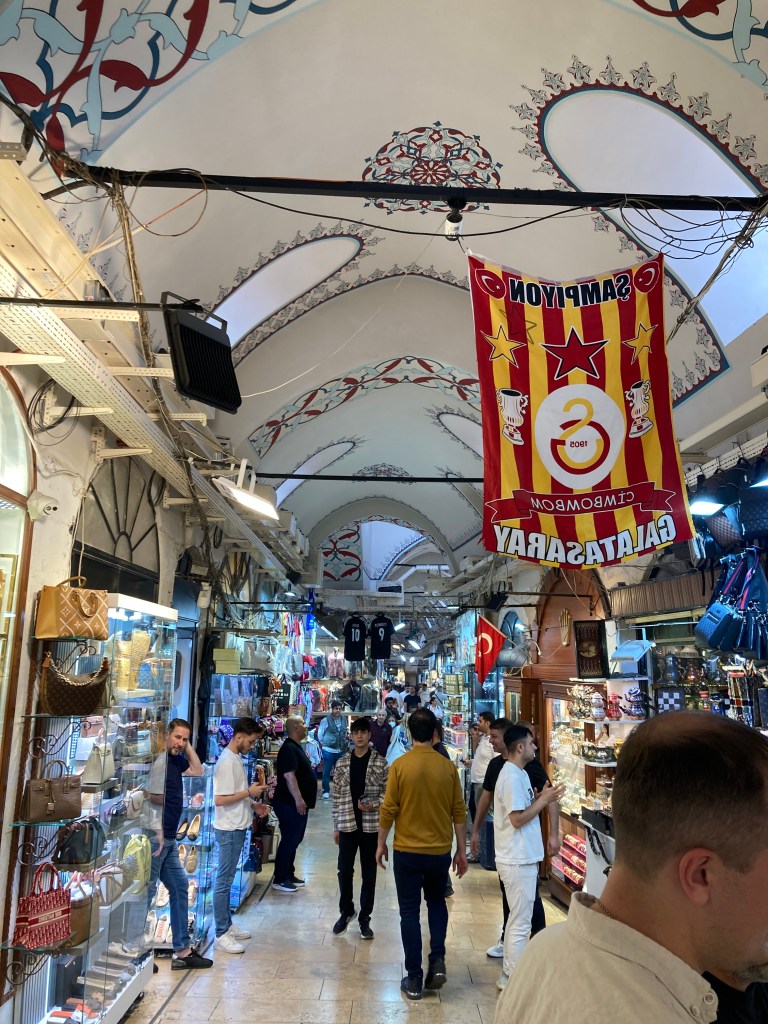
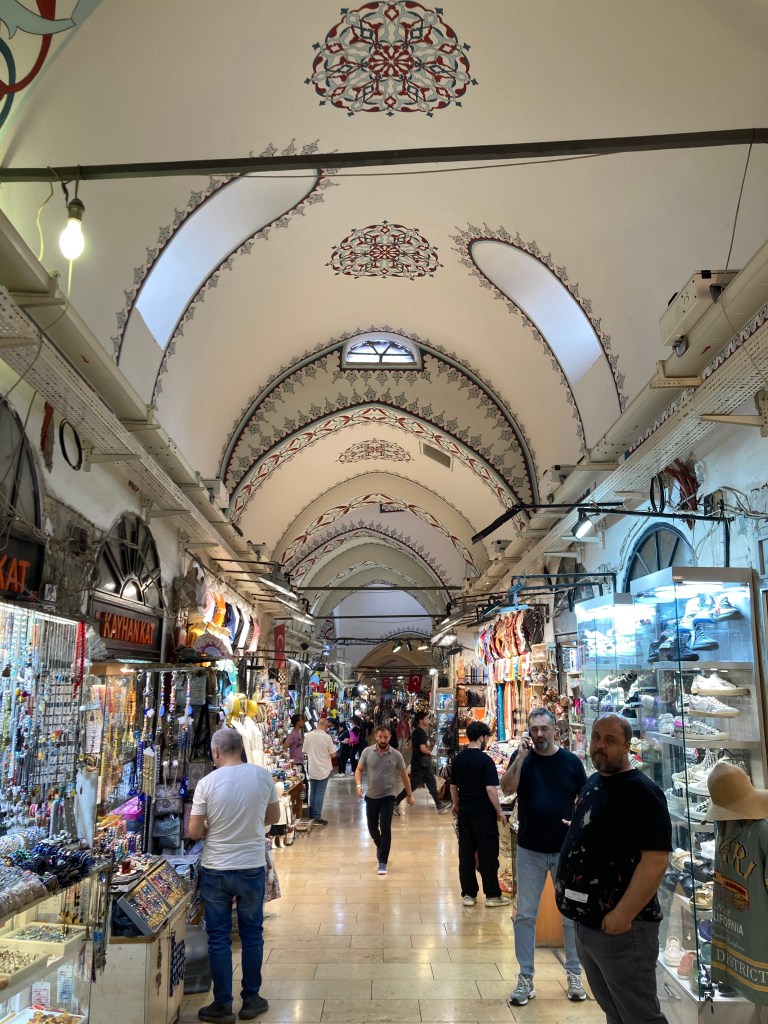
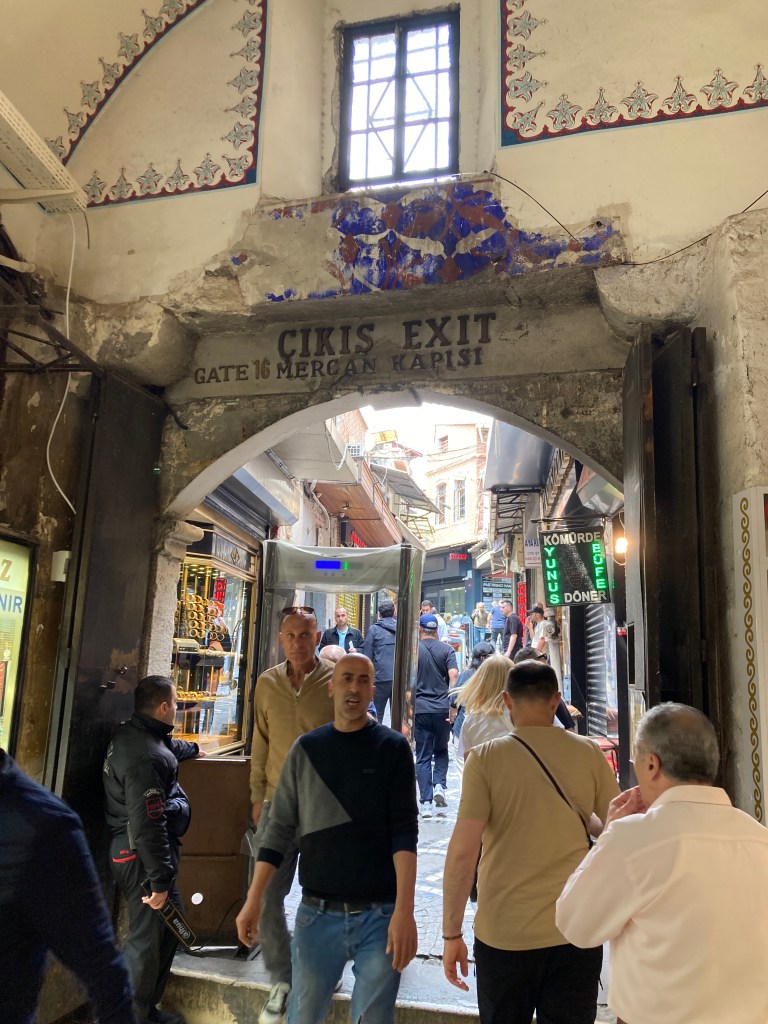
After having breakfast, I started another day’s itinerary. The Grand Bazaar (Turkish: Kapalıçarşı, meaning ‘Covered Market’; also Büyük Çarşı, meaning ‘Grand Market’) in Istanbul is one of the largest and oldest covered markets globally. It comprises 61 covered streets and over 4,000 shops, spanning a total area of 30,700 square meters. The bazaar attracts between 250,000 and 400,000 visitors daily. In 2014, it was ranked as the world’s most-visited tourist attraction, with 91,250,000 annual visitors. The Grand Bazaar in Istanbul is often considered one of the earliest shopping malls in the world.
The Grand Bazaar is situated within the walled city of Istanbul, in the Fatih district and the neighborhood of Kapalıçarşı. It extends approximately from west to east, positioned between the Beyazit Mosque and the Nuruosmaniye Mosque. Access to the Bazaar is convenient from Sultanahmet and Sirkeci via trams (Beyazıt-Kapalıçarşı stop).
Sinan Pasha Mosque (Istanbul)
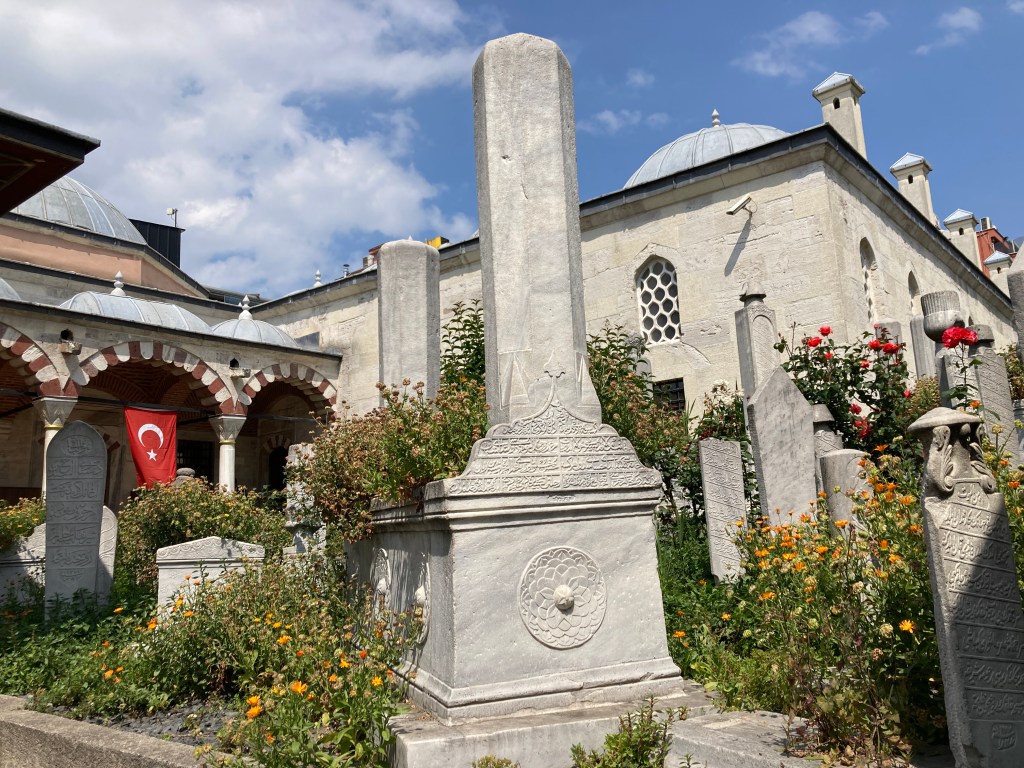
The Sinan Pasha Mosque (Turkish: Sinan Paşa Camii) is an Ottoman mosque situated in the densely populated Beşiktaş district of Istanbul, Turkey. Constructed by the Ottoman architect Mimar Sinan for the admiral Sinan Pasha, it stands adjacent to the türbe (tomb) of Barbaros Hayrettin Pasha, located just across the street.
The mosque was commissioned by the Ottoman admiral Sinan Pasha, who was the younger brother of the grand vizier Rüstem Pasha. Designed by the imperial architect Mimar Sinan, construction began after Sinan Pasha’s death in 1554. The completion date is recorded as November/December 1555 in the gilded Arabic foundation inscription above the arched gateway of the mosque. Additionally, the Turkish inscription carved around the white marble fountain basin in the courtyard indicates the date as 1555–56.

Gazi Atik Ali Pasha Mosque
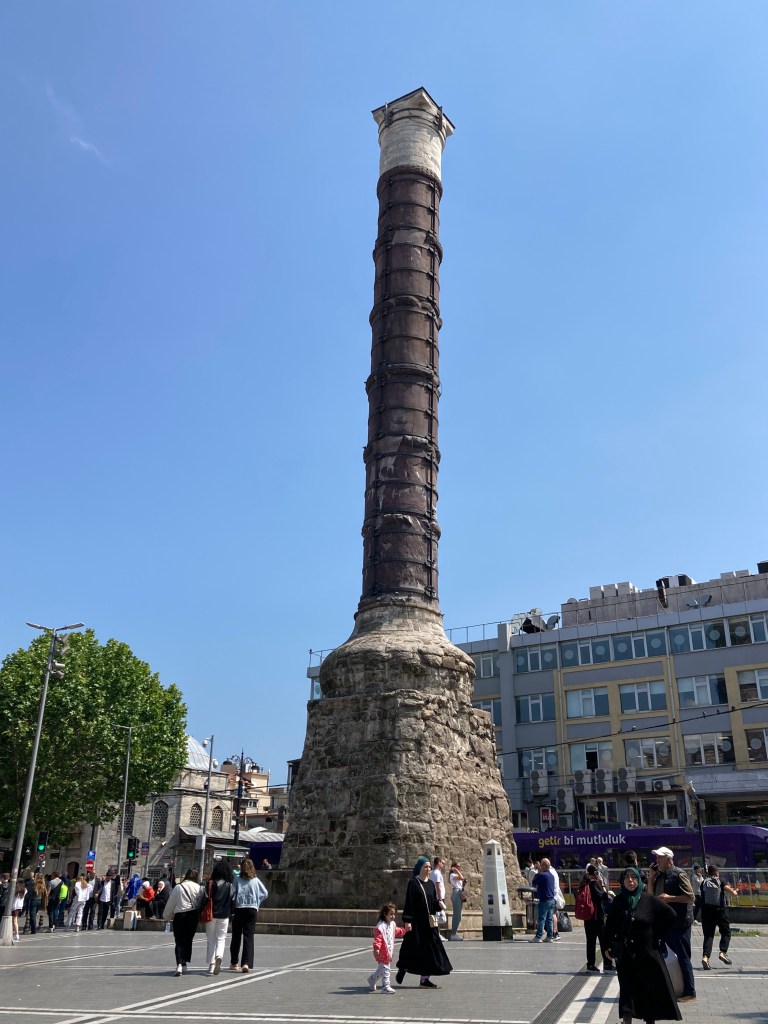
The Gazi Atik Ali Pasha Mosque (Turkish: Gazi Atik Ali Paşa Camii) is a 15th-century Ottoman mosque situated in the Çemberlitaş neighborhood of the Fatih district in Istanbul, Turkey. Construction began under the orders of the future Grand Vizier Hadım Atik Ali Pasha in 1496 and was completed in 1497, during the reign of Sultan Bayezid II. The mosque is situated near the entrance to the Kapalıçarşı (Grand Bazaar), the Column of Constantine, and the historic Nuruosmaniye Mosque.
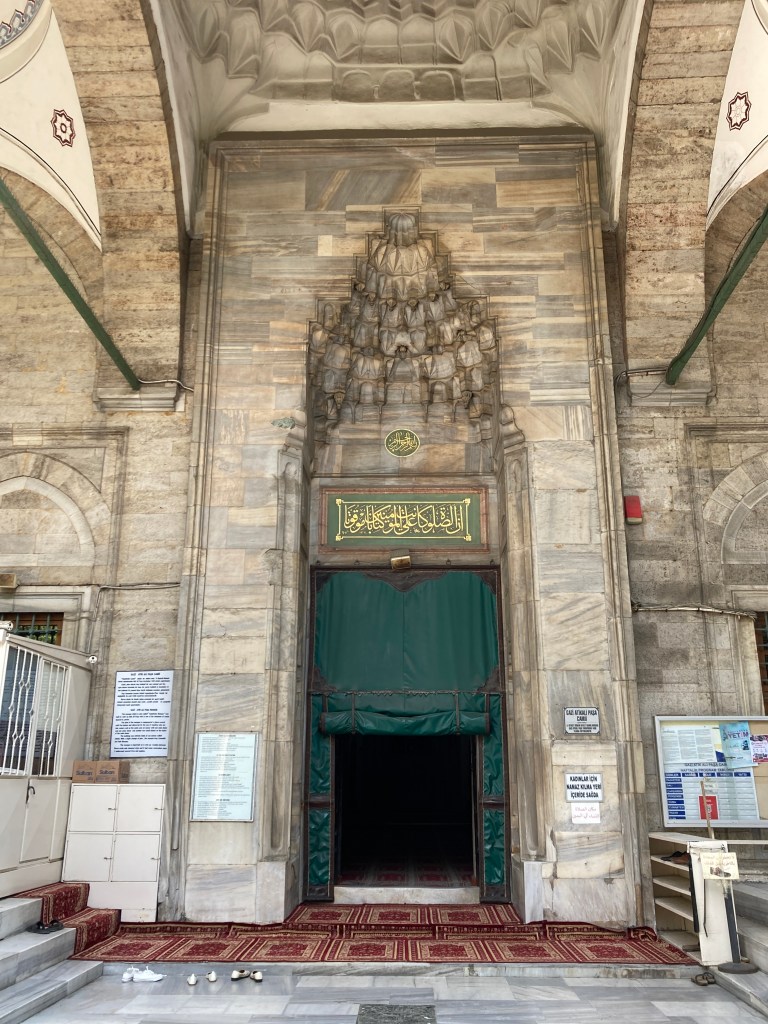
Nuruosmaniye Mosque
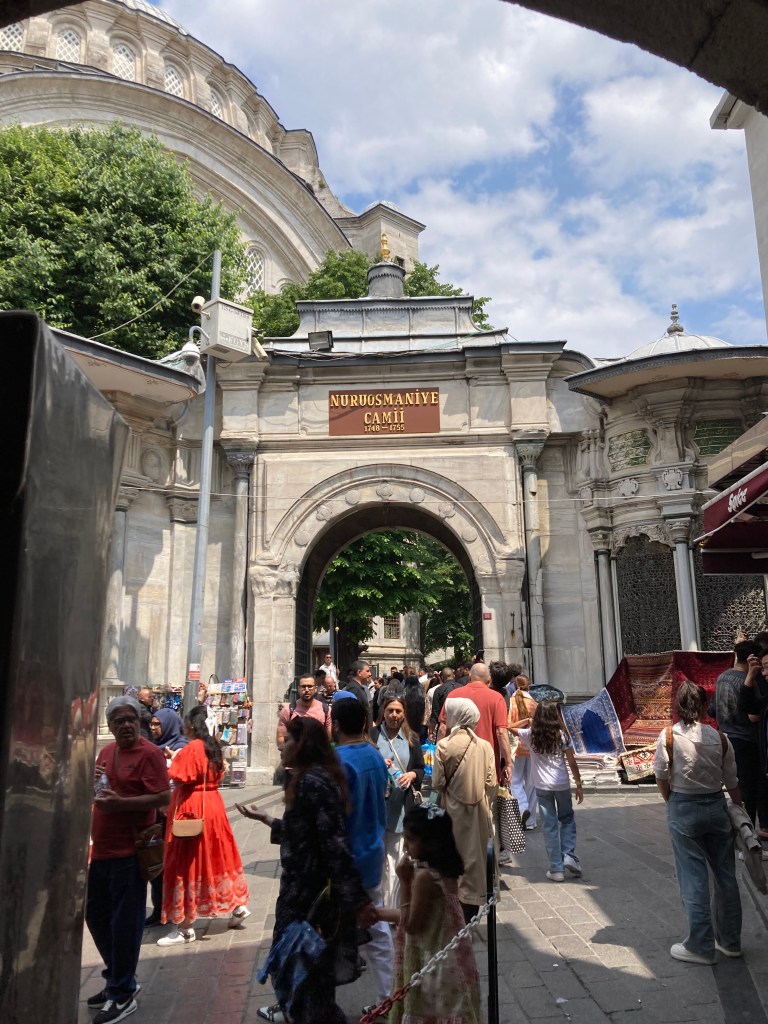
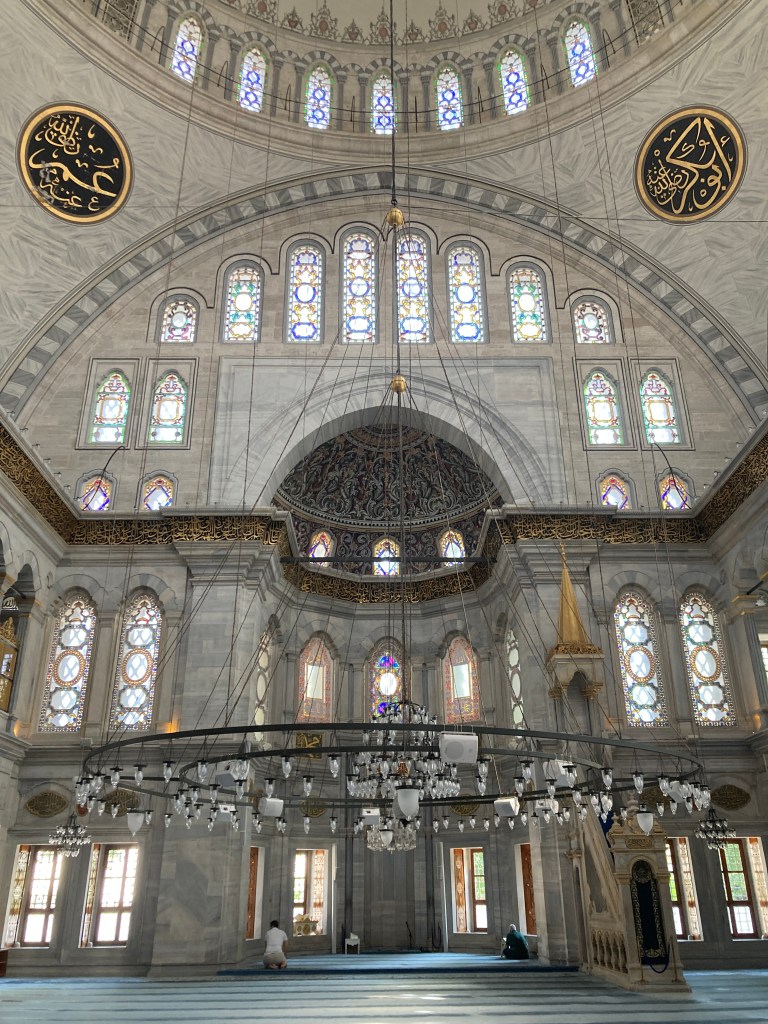
The Nuruosmaniye Mosque (Turkish: Nuruosmaniye Camii) is an 18th-century Ottoman mosque located in the Çemberlitaş neighborhood of the Fatih district in Istanbul, Turkey. It was included in the Tentative List of World Heritage Sites in Turkey in 2016.
Designed by a Greek non-Muslim architect named Simeon Kalfa, the Nuruosmaniye Mosque was the first monumental Ottoman building to showcase the new Ottoman baroque style, incorporating elements of baroque and neoclassical architecture from Europe. The mosque’s ornamentation and curved courtyard reflect its baroque influences. Its dome is one of the largest in Istanbul. The mosque is part of a larger religious complex, or külliye, serving as a center for culture, religion, and education in the neighborhood.
Situated near the Forum of Constantine, where the Column of Constantine still stands, the Nuruosmaniye Mosque is surrounded by Istanbul’s Grand Bazaar (Turkish: Kapalıçarşı). Following the construction of the Sultan Ahmed Mosque, the Nuruosmaniye Mosque was the first imperial mosque to be built in 100 years.

Tomb of Sultan Ahmet I
The tomb (türbe) of Sultan Ahmet I, the Blue Mosque’s great patron, is situated on the north side of the mosque facing Sultanahmet Park. Ahmet, who ascended to the imperial throne at the age of 13, passed away in 1617 at the young age of 27. His tomb was built between 1617 and 1619 and, like the mosque, is adorned with exquisite İznik tiles.
Buried alongside Ahmet are his wife, Kösem, who was strangled to death in the Topkapı Harem, and his sons, Sultan Osman II (reigned 1618–22), Sultan Murat IV (reigned 1623–40), and Prince Beyazıt (murdered by order of Murat).

Blue Mosque, Istanbul
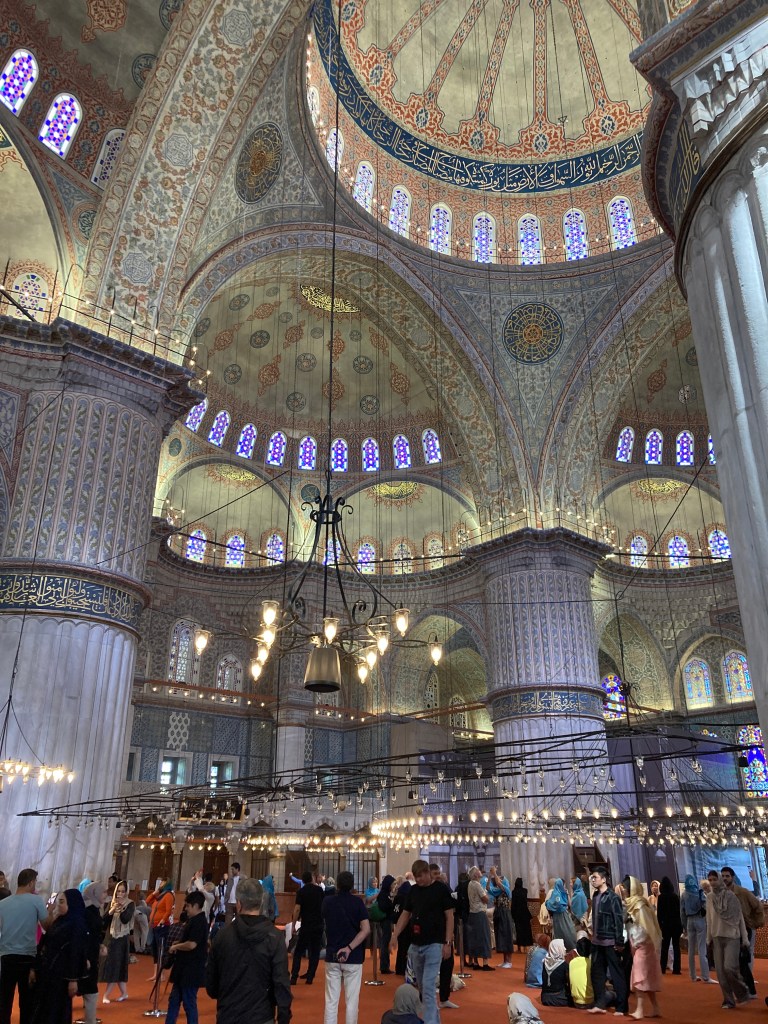
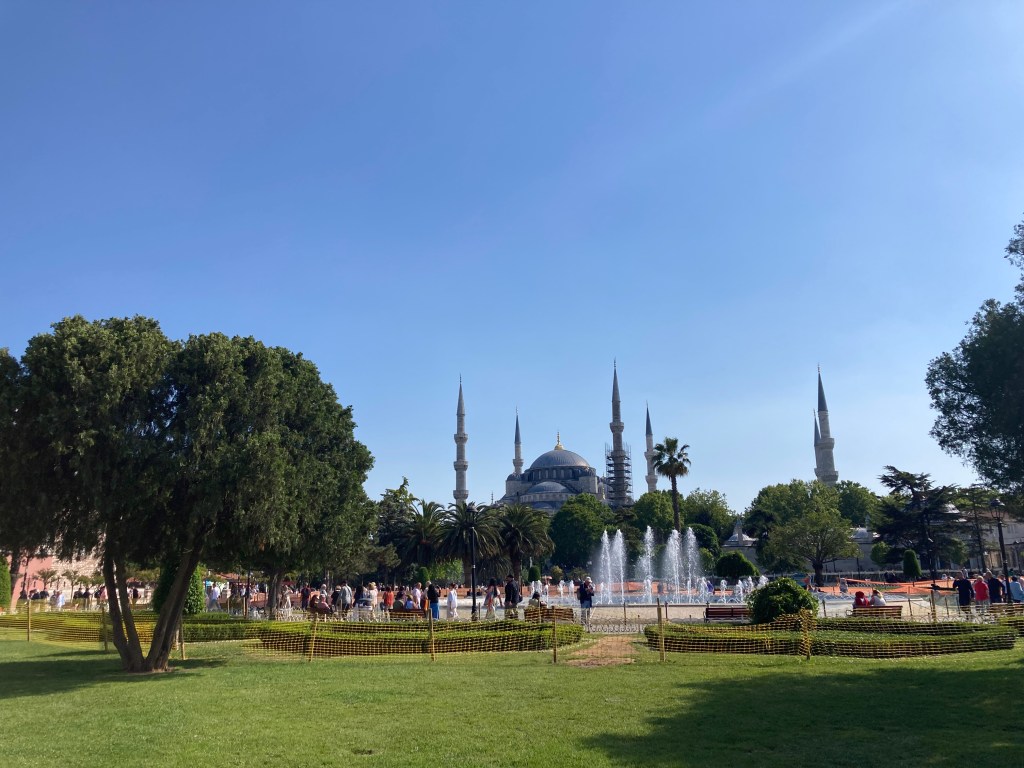
The Blue Mosque in Istanbul, also known as the Sultan Ahmed Mosque (Turkish: Sultan Ahmet Camii), is a historical imperial mosque from the Ottoman era located in Istanbul, Turkey. Construction took place between 1609 and 1617 under the rule of Ahmed I, and it continues to serve as an active mosque today. Renowned for its stunning architecture, the mosque is a major tourist attraction and stands as an iconic symbol of Ottoman heritage.
The mosque features a traditional Ottoman design, characterized by a central dome surrounded by four semi-domes over the prayer hall. It is accompanied by a spacious courtyard and six minarets. Inside, the mosque is adorned with thousands of Iznik tiles and intricate floral motifs predominantly in shades of blue, hence its nickname. Additionally, the mosque’s complex, or külliye, includes Ahmed’s tomb, a madrasa, and several other buildings.
Situated near the former Hippodrome and facing the Hagia Sophia, another popular tourist destination, the Blue Mosque was inscribed on the UNESCO World Heritage Site list in 1985 as part of the “Historic Areas of Istanbul.”
Santa Sofia
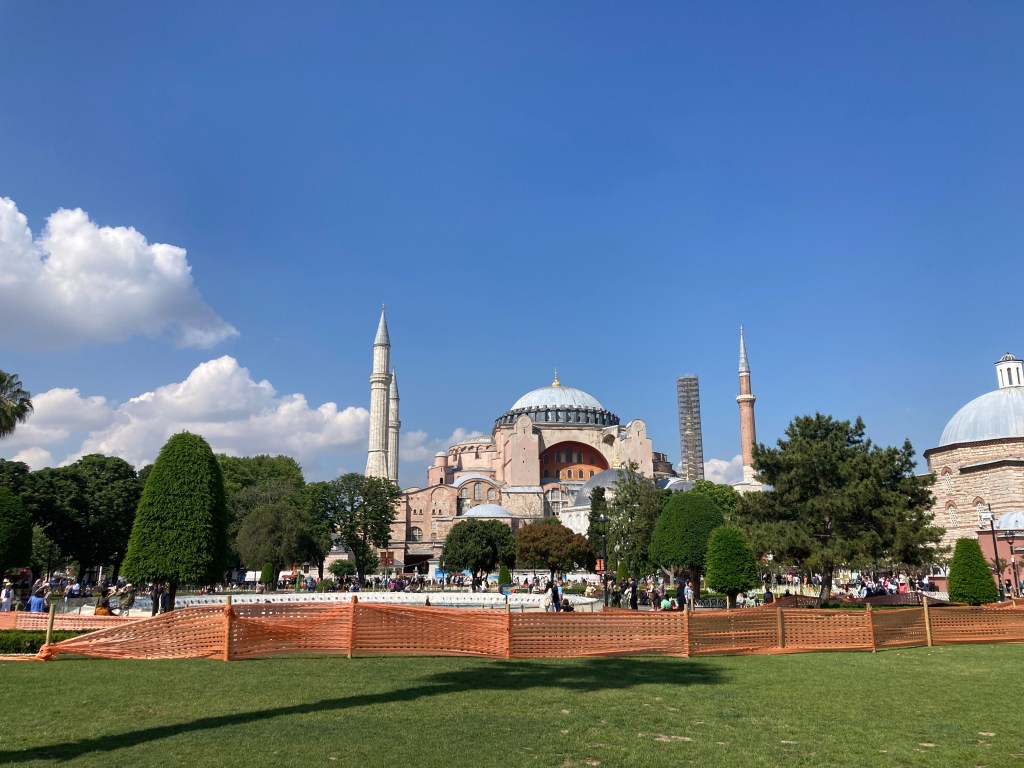
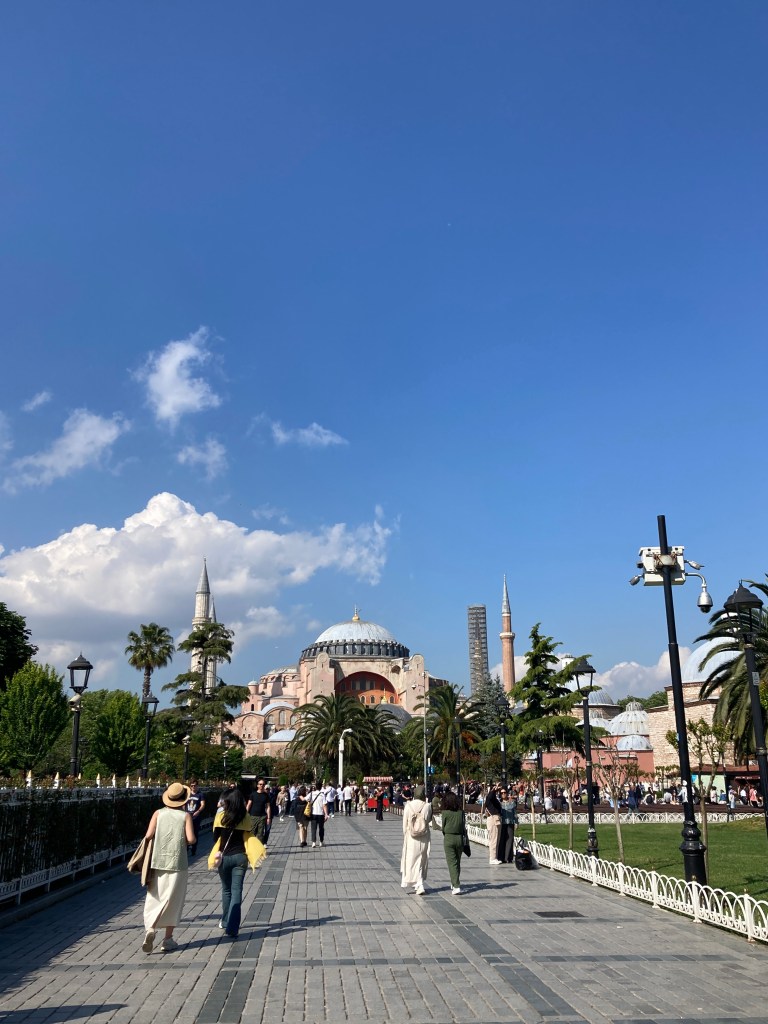
Hagia Sophia (Greek: Άγια Σοφία; romanized: Agia Sophia, meaning “Holy Wisdom”; Turkish: Ayasofya) is an imposing building constructed between 532 and 537 by the Byzantine Empire to serve as the cathedral of Constantinople (modern-day Istanbul, Turkey). From its completion in 537 until 1453, it served this purpose, except during the period from 1204 to 1261, when it was converted into a Roman Catholic cathedral during the Latin Patriarchate of Constantinople following the Fourth Crusade’s sack of the imperial capital. The building functioned as a mosque from May 29, 1453, until 1931, when it was secularized. It reopened as a museum on February 1, 1935.
The church was dedicated to the Logos, the second person of the Holy Trinity, with the dedication ceremony held on December 25, the date commemorating the Nativity of Jesus, the incarnation of the Logos in Christ. Although it is commonly called “Hagia Sophia” (as if it were dedicated to Saint Sophia), “sophia” is the phonetic transliteration into Latin of the Greek word for “wisdom” — the full name of the church in Greek is Ναός της Αγίας του Θεού Σοφίας, “Church of the Holy Wisdom of God.”
Famous primarily for its enormous dome, Hagia Sophia is considered the epitome of Byzantine architecture and is regarded as having “changed the history of architecture.” It was the largest cathedral in the world for almost a thousand years until the Seville Cathedral was completed in 1520. The current building was originally constructed as a church between 532 and 537 by order of the Byzantine Emperor Justinian I and was the third church of Hagia Sophia to occupy the site, the previous two having been destroyed in civil revolts. It was designed by the Greek scientists Isidore of Miletus, a physician, and Anthemius of Tralles, a mathematician.
The church contained a large collection of relics and featured a 15-meter-high silver iconostasis, among other things. It served as the seat of the Ecumenical Patriarchate of Constantinople and was the central point of the Orthodox Church for almost a thousand years. It was here that Cardinal Humbert excommunicated Patriarch Michael I Cerularius in 1054, initiating the Great Schism, which persists to this day.
In 1453, Constantinople was conquered by the Ottoman Empire under Sultan Mehmed II, the Conqueror, who subsequently ordered the building to be converted into a mosque. The bells, altar, iconostasis, and sacramental vessels were removed, and many mosaics were covered with plaster, only to be restored in 1931 during the conversion of the church into a secular museum. Various Islamic features — such as the mihrab, minbar, and four minarets — were added during this period. It remained a mosque until 1931, when Kemal Atatürk ordered its secularization. It was closed to the public for four years and reopened in 1935 as a museum of the newly created Republic of Turkey. Nevertheless, the colorful mosaics largely remained covered with plaster, and the building deteriorated. A UNESCO mission in 1993 noted falling plaster, dirty marble cladding, broken windows, decorative paintings damaged by moisture, and lack of maintenance on the roof. Since then, cleaning, roofing, and restoration efforts have been undertaken. The exceptional floor and wall mosaics, cemented over since 1453, are now being gradually uncovered and recreated.
For nearly 500 years, Hagia Sophia was the principal mosque of Istanbul and served as a model for many Ottoman mosques, including the nearby Blue Mosque, Şehzade Mosque, Suleymaniye Mosque, Rüstem Pasha Mosque, and Kılıç Ali Pasha Mosque.
On July 10, 2020, the Turkish Council of State revoked the building’s museum status, and a subsequent decree by President Recep Tayyip Erdoğan ordered the reclassification of Hagia Sophia, converting it back into a mosque.
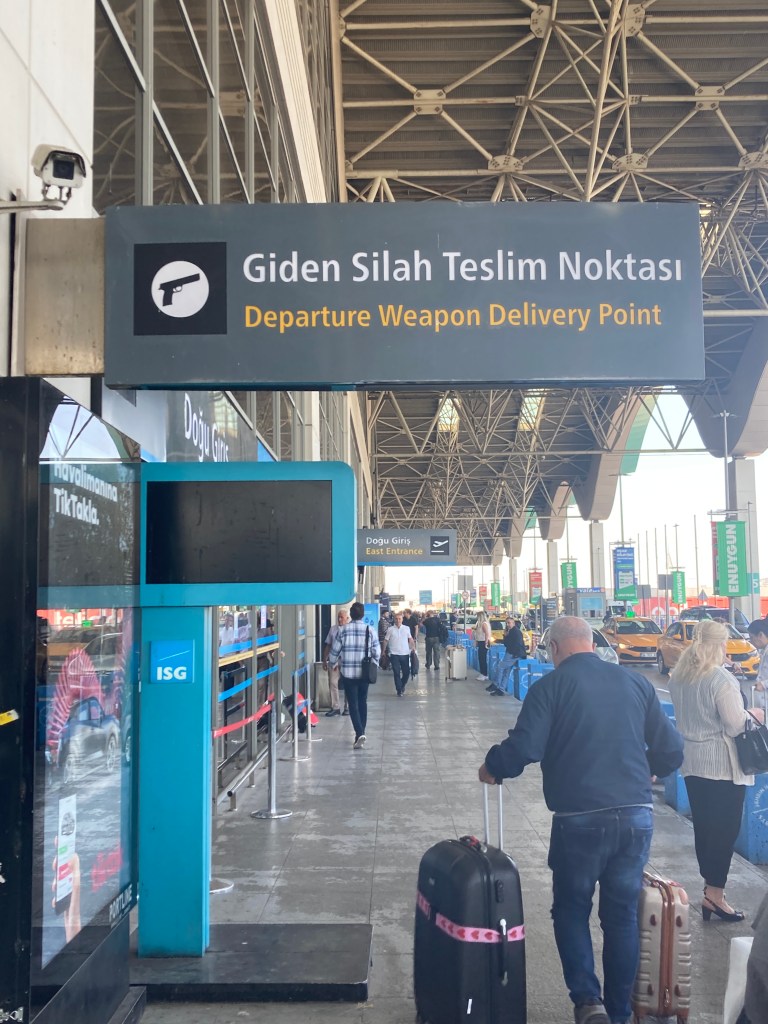
The next day, after breakfast, I headed to Taksim Square to catch the airport bus to the airport. The fare was 121 lira. It was the first time I saw that firearms could be checked in at the airport.

Okay, if you liked this article, please give it a like and share it. Thank you.

 Real Traveler, Real Experiences, Real Results.
Leave a comment