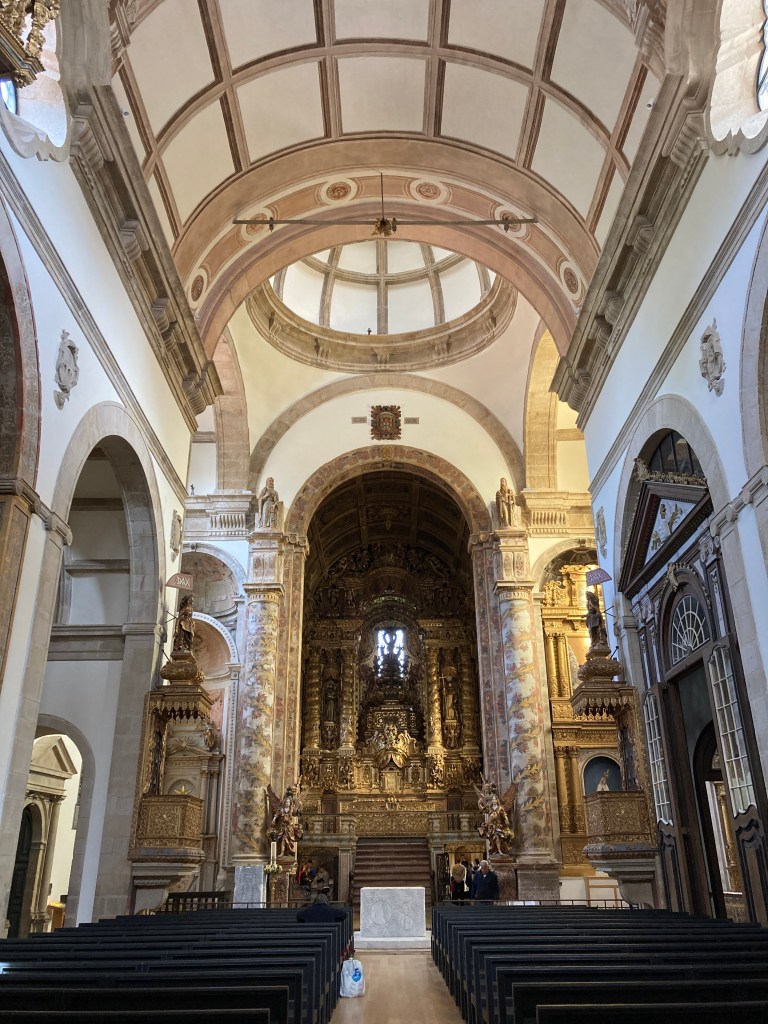
Amarante’s heart beats with history and grandeur, epitomized by the Convento de São Gonçalo, located in the city center. This national monument, designated in 1910, invites you to pause and reflect on its historical significance.
The convent’s origins date back to 1543, when the first stone was laid on the site of an earlier hermitage dedicated to Amarante’s patron saint, São Gonçalo. The construction spanned 80 years, incorporating various architectural styles as it progressed through different reigns. The convent’s rich tapestry includes Renaissance, Mannerist, Baroque, and 19th-century elements.
The main façade presents a stark contrast to the side façade, which is distinguished by a beautiful altarpiece portal and the Balcony of the Kings. This balcony features statues of four monarchs: D. João III, D. Sebastião, Cardinal-Rei D. Henrique, and D. Filipe I. On the lower floor, statues of S. Francisco and S. Domingos take prominence.
The second floor, characterized by its Mannerist style, surprises visitors with six Corinthian columns supporting the structure and a stone image of Saint Gonçalo. Below, a bridge with three round arches and crenellations forms the base.
Adjacent to the church is the Amadeo de Souza-Cardoso Municipal Museum, a cultural haven that adds to the site’s allure.
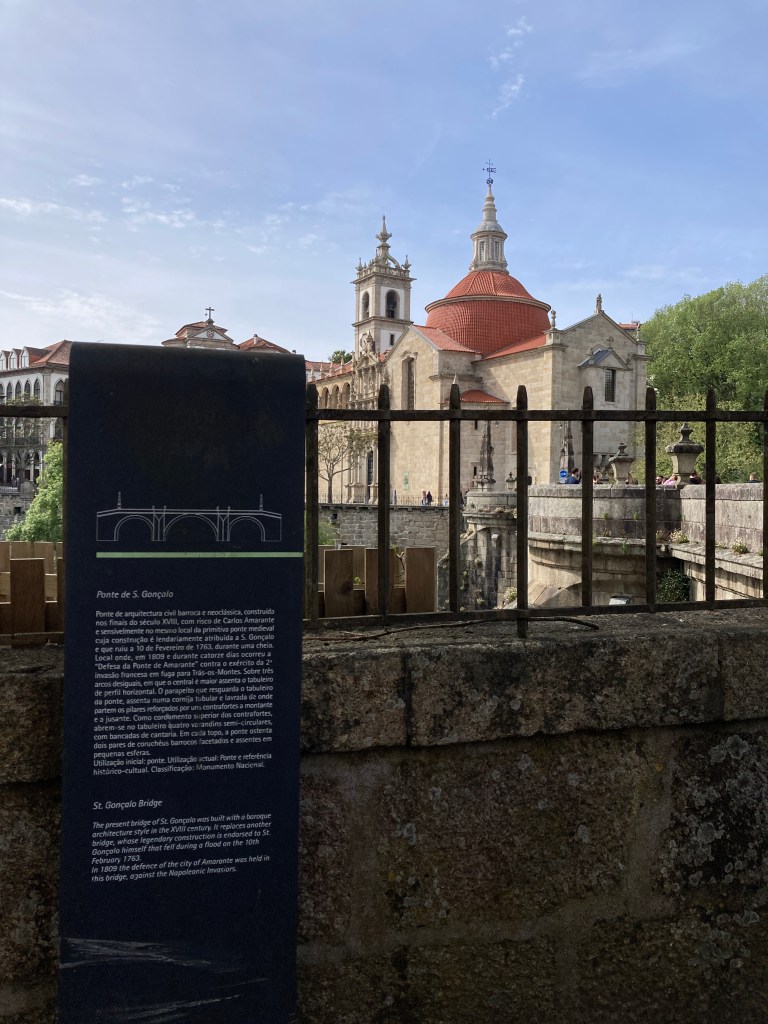
São Gonçalo Bridge
Time and history have elevated the São Gonçalo Bridge to one of the most illustrious symbols of Amarante’s identity and a source of pride for the municipality.
The bridge is named after São Gonçalo de Amarante, who is credited with its construction. According to legend, he built the bridge with the help of the local people and a series of miracles. São Gonçalo is said to have moved the largest stones himself and summoned fish to feed the workers.
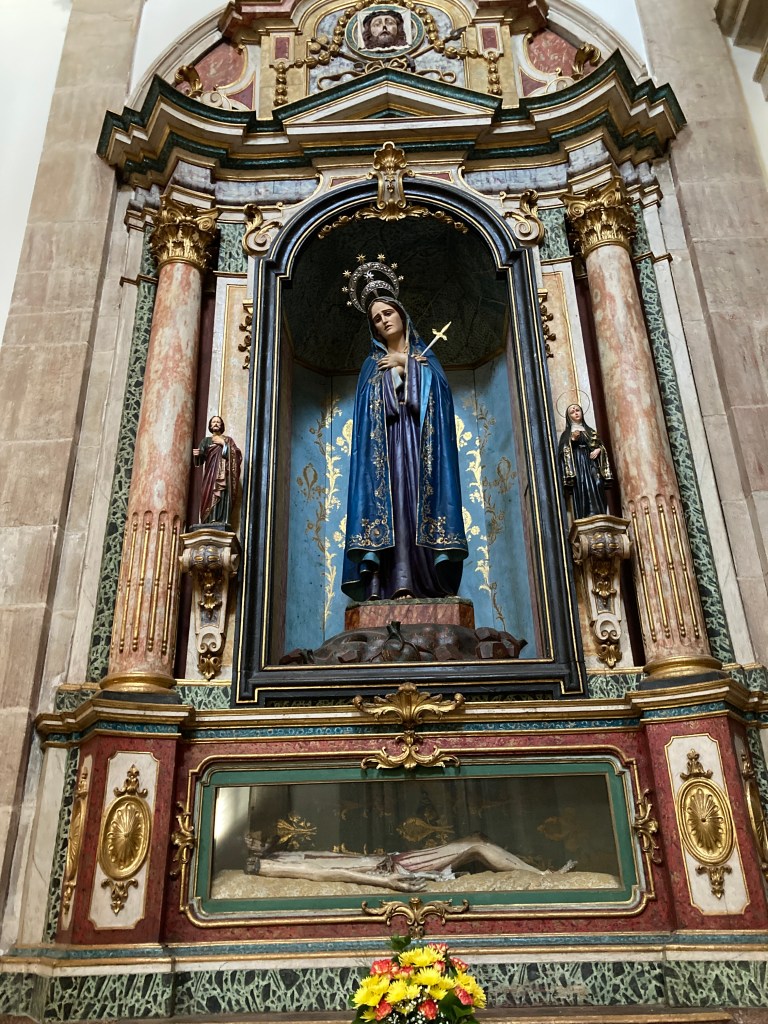
In 1763, the bridge collapsed under the weight of heavy rains. Miraculously, the Gothic image of Nossa Senhora da Piedade, which stood on a two-sided cross on the bridge, remained intact. Today, this image is preserved in a corner of the church, facing the rebuilt bridge.
The São Gonçalo Bridge has played a significant role in history, notably serving as a battleground during the Napoleonic invasions. The heroic struggle and national resistance against the French troops are commemorated by a tombstone placed in one of the pyramids on the bridge. This event earned Amarante the prestigious necklace of the Military Order of the Tower and Sword.
The bridge spans 50 meters and features a deck with four semicircular balconies. At each end stand two baroque obelisks with epigraphic inscriptions that recount the battles against the Napoleonic forces and celebrate the honor brought to Amarante by the Portuguese victory.

If you enjoyed this article, please like and share it. Thank you.

 Real Traveler, Real Experiences, Real Results.
Leave a comment